| |
Middle
East War
Spreads
Economic
Pain Far
Beyond
the
Battlefield
Daoud
Al-Jaber
- Middle
East
Affairs
Analysis
Tell Us
Worldwide
News
Network
TEHRAN/WASHINGTON
- Iran’s
war is
no
longer
measured
only in
missile
strikes,
damaged
military
sites or
the
latest
warnings
from
Tehran,
Washington
and
Jerusalem.
Its most
enduring
battlefield
may now
be the
world
economy.
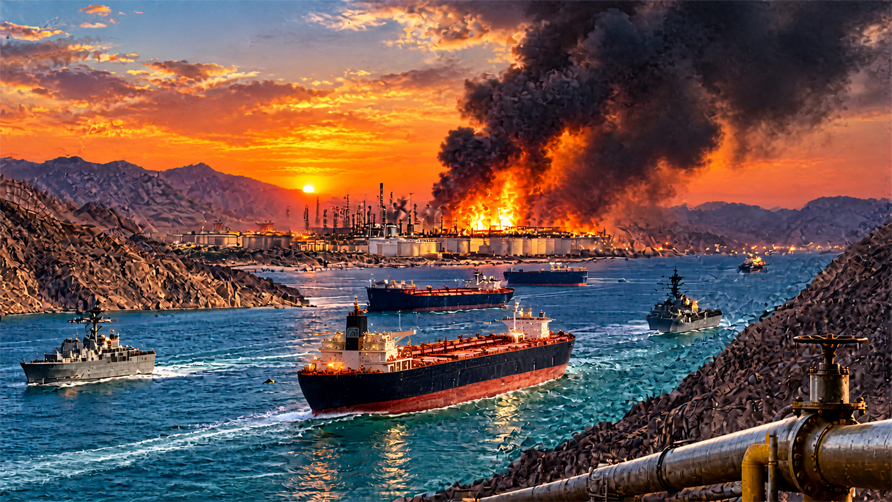
The
conflict
has
turned
the
Strait
of
Hormuz
into a
danger
zone for
oil
tankers
and gas
carriers,
disrupting
a
waterway
that
normally
carries
a major
share of
the
world’s
energy
supplies.
The
effects
are
reaching
far
beyond
the
Gulf.
Fuel
prices
are
climbing,
shipping
costs
are
rising
and
governments
from
Asia to
Europe
are
again
facing
the
threat
of
higher
inflation.
The
central
fact is
simple:
the
world
still
depends
heavily
on
Middle
East
energy,
and Iran
sits
beside
one of
the most
important
shipping
routes
on
earth.
The
Strait
of
Hormuz
is a
narrow
passage
between
Iran and
the
Arabian
Peninsula.
Tankers
carrying
oil from
Saudi
Arabia,
Iraq,
Kuwait,
the
United
Arab
Emirates
and
other
producers
must
pass
through
it to
reach
global
markets.
Liquefied
natural
gas from
Qatar
also
moves
through
the same
waters.
With the
war
continuing,
shipowners
are
being
forced
to make
hard
choices.
Some
vessels
are
waiting
outside
the
danger
zone.
Others
are
changing
routes
where
possible
or
charging
higher
rates to
enter
the
Gulf.
Insurance
costs
have
increased
as
companies
weigh
the risk
of
drones,
mines,
missiles
and
attacks
on
commercial
shipping.
Every
delayed
tanker
adds
pressure
to oil
markets.
Every
threat
to a
ship
pushes
up the
cost of
moving
fuel.
And
every
increase
in
energy
prices
is
eventually
passed
on to
ordinary
people
through
higher
prices
for
gasoline,
groceries,
transportation
and
heating.
The
impact
is
especially
serious
for
diesel
fuel.
Diesel
keeps
the
global
economy
moving.
It
powers
trucks,
trains,
farm
equipment,
construction
machinery
and many
generators.
When
diesel
prices
rise,
the cost
of
delivering
food and
goods
rises
with it.
Airlines
also
face
higher
jet-fuel
costs,
which
can lead
to more
expensive
tickets
and
cargo
rates.
Governments
have
tried to
soften
the blow
by
cutting
fuel
taxes,
using
emergency
oil
supplies
and
helping
households
pay
energy
bills.
But
those
actions
have
limits.
Emergency
reserves
are not
endless,
and
subsidies
can
strain
national
budgets
already
weakened
by debt
and slow
economic
growth.
For
central
banks,
the Iran
war has
brought
back a
problem
they
hoped
was
fading:
inflation
caused
by
energy
prices.
If oil
and fuel
costs
stay
high,
central
banks
may be
forced
to keep
interest
rates
higher
for
longer.
That
would
make
mortgages,
car
loans,
business
loans
and
credit-card
debt
more
expensive.
The risk
is not
just
today’s
oil
price.
It is
what
could
happen
next.
A major
attack
on a
tanker,
an oil
terminal,
a
refinery
or a
pipeline
could
cause
another
sharp
surge in
prices.
The
widening
danger
around
Yemen
and the
Red Sea
has
added
another
threat
to
global
shipping,
leaving
companies
with
fewer
safe and
affordable
routes.
The Gulf
states
can move
some oil
through
pipelines
that
avoid
Hormuz,
but not
enough
to
replace
all the
lost
tanker
traffic.
Other
producers
may
increase
output,
but
there is
no quick
replacement
for the
huge
volume
of oil
and gas
normally
shipped
from the
Gulf.
For now,
the
conflict
has
created
a
dangerous
global
reality.
The war
may be
centered
on Iran,
but the
economic
damage
is
spreading
worldwide.
It is
showing
how
quickly
a
regional
war can
become a
kitchen-table
issue
for
families
thousands
of miles
away.
The
message
from the
Gulf is
clear:
until
the
fighting
ends or
shipping
lanes
become
safe
again,
the
world
economy
will
remain
exposed.
This
Tell Us
USA News
Network
report
is
produced
in part
by Ai
and can
make
mistakes.
Please
contact
and let
us know
of any
errors
you may
find.
info@tellususa.com
|




 I
HI TECH NEWS
I
SPORTS
I
I
HI TECH NEWS
I
SPORTS
I