|
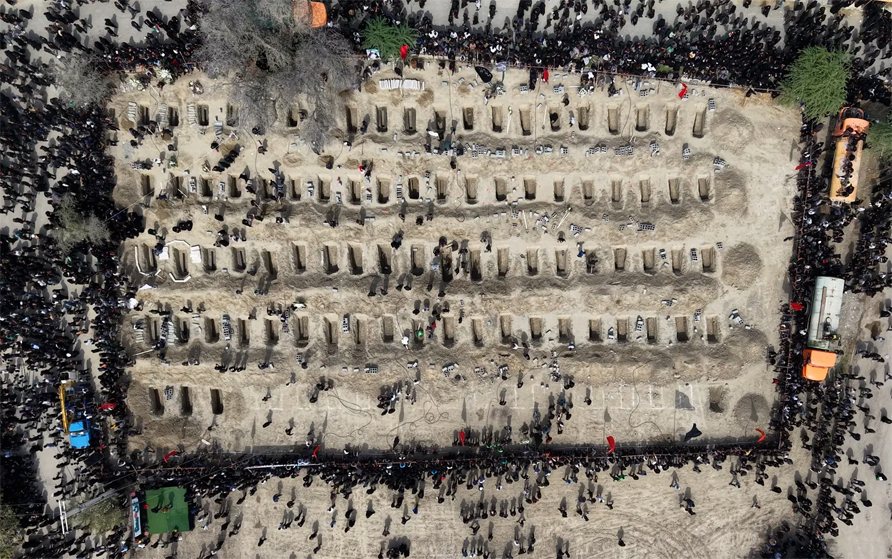
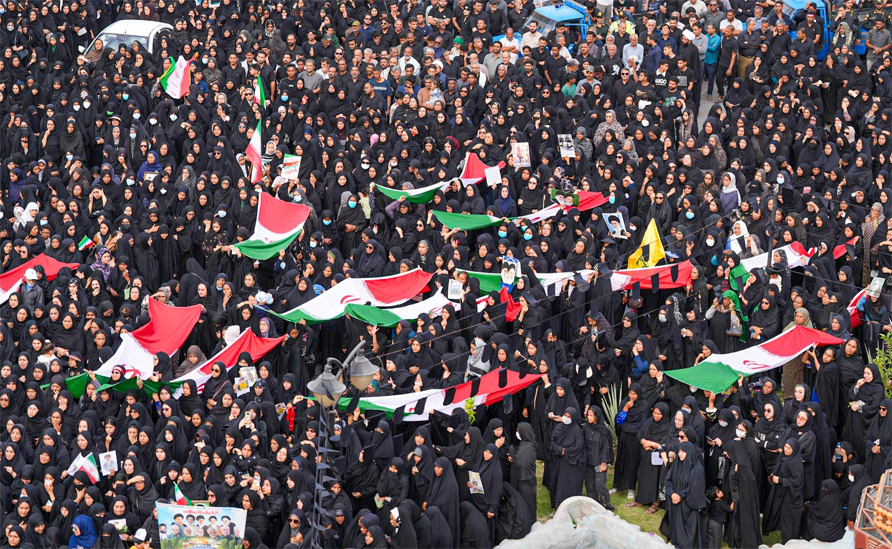
There
was a
huge
turnout
as the
city
showed
up en
masse to
honor
the
lives of
those
lost.
U.S.
military
investigators
now
quietly
acknowledge
what
officials
in
Tehran,
UN
experts
and a
growing
body of
open-source
evidence
have
been
pointing
to for
days.
Anadolu
/ Getty
Images |
|
|
|
|
|
 |
 |
 |
|
|
|
|
|
|
 |
|
|
An
aerial
view of
a
graveyard
as
funerals
are held
for
students
and
staff
from a
girls'
school,
who
authorities
said
were
killed
in a
US-Israeli
strike
on
February
28, on
March 3,
2026 in
Minab,
Iran.Handout–Getty
Images |
| |
Bad
Maps,
Broken
Lives:
Inside
the U.S.
Strike
on an
Iranian
Girls’
School
Kills
168
Students
Patricia
Romero -
International
-
Politics
Daoud
Al-Jaber
- Middle
East
Affairs
Analysis
Tell Us
Worldwide
News
Network
TERAN/WASHINGTON
- U.S.
military
investigators
now
quietly
acknowledge
what
officials
in
Tehran,
UN
experts
and a
growing
body of
open-source
evidence
have
been
pointing
to for
days:
the
obliteration
of an
Iranian
girls’
school,
and the
deaths
of
roughly
150
children
inside,
was
almost
certainly
caused
by an
American
missile
guided
by bad
information.
The
strike
on
Shajareh
Tayyebeh
girls’
elementary
school
in
Minab, a
dusty
city in
Iran’s
southern
Hormozgan
province,
came
just as
the
latest
U.S.-Israeli
air
campaign
against
Iranian
targets
was
getting
underway.
It was
late
morning
when the
blast
tore
through
classrooms
of
seven-
to
twelve-year-olds.
By the
time the
dust
settled
and
frantic
relatives
pushed
past
cordons
to find
their
children,
the
schoolyard
had
become a
makeshift
morgue.
Iranian
authorities
say
between
150 and
175
people
were
killed,
most of
them
schoolgirls
and
their
teachers;
the
precise
toll
hardly
changes
the
scale of
the
horror.
Inside
the
Pentagon,
the
emerging
narrative
is one
of a
catastrophic
error
rather
than a
rogue
operation.
A
preliminary
U.S.
review
has
traced
the
missile
to an
operation
aimed at
nearby
Revolutionary
Guard
and
naval
facilities.
The
problem,
investigators
say, is
that the
targeting
package
treated
the
school
compound
as if it
were
still
part of
those
military
sites,
relying
on
intelligence
and
mapping
data
that
should
have
been
retired
years
ago.
Somewhere
between
2013 and
2016,
the land
was
fenced
off, the
barracks
converted
and the
site
reopened
as a
civilian
school.
The
paperwork,
and the
databases
that
shape
life-and-death
decisions,
did not
fully
keep up.
That
disconnect—between
the
reality
on the
ground
and the
picture
inside
the
targeting
software—is
now at
the
heart of
the U.S.
probe.
Investigators
are
asking
why such
obviously
sensitive
targets
were not
re-checked
against
the most
current
imagery,
why no
one
flagged
the
unmistakable
signatures
of a
functioning
school,
and how
a
civilian-risk
mitigation
system
that has
been
refined
over two
decades
of war
allowed
a
building
full of
children
to be
designated
as a
legitimate
target.
For a
military
that has
built
its
doctrine
around
precision
and
claims
of
near-clinical
restraint,
the
answers
will be
uncomfortable.
Tehran,
for its
part,
moved
swiftly
to frame
the
attack
as a
deliberate
massacre.
Iranian
officials
accused
Washington
and
Jerusalem
of
intentionally
targeting
children
to break
public
morale,
language
calibrated
both for
domestic
outrage
and for
sympathetic
ears
abroad.
In the
first 48
hours,
President
Donald
Trump’s
administration
countered
with
suggestion
and
doubt:
maybe an
Iranian
air-defense
missile
malfunctioned,
maybe an
explosion
at an
adjacent
Guards
depot
touched
off the
carnage.
Those
theories
did not
survive
long.
Geolocated
videos
and
satellite
images,
picked
apart
frame by
frame by
digital
investigators
an ocean
away,
showed
what
appears
to be a
precision
munition
dropping
straight
into the
school
compound.
The
forensic
work
done in
public
by
analysts—examining
blast
craters,
debris
and
impact
angles—is
converging
with the
classified
assessments
now
circulating
in
Washington.
The
weapon
fragments
and
strike
pattern
look
like
those of
a
U.S.-made
cruise
missile,
a
capability
Iran
does not
possess
and that
Israel
is not
believed
to have
used in
that
area. In
other
words,
for all
the
early
spin,
this has
the
hallmarks
of an
American
strike
gone
disastrously
wrong.
Beyond
the
immediate
blame
game,
the
Minab
bombing
has
reopened
an old
and
deeply
uncomfortable
conversation
about
how
modern
militaries
wage war
around
civilians.
For
years,
U.S.
commanders
have
argued
that
better
sensors,
stricter
rules
and
layers
of legal
review
have
driven
down
civilian
casualties.
Yet time
and
again—from
Kunduz
to Mosul
to
Raqqa—investigations
have
shown
how
stale
intelligence,
confirmation
bias and
institutional
complacency
can
punch
holes
through
those
safeguards.
Minab
now
risks
joining
that
grim
list.
UN
human
rights
officials
have
already
labeled
the
attack a
grave
assault
on
children
and
education
and
warned
that,
depending
on what
was
known at
the time
of the
strike,
it may
amount
to a war
crime.
Rights
groups
are
demanding
an
independent
investigation
with
real
teeth,
not an
opaque
after-action
review
that
ends in
a quiet
policy
memo and
no
accountability.
On
Capitol
Hill,
even
usually
hawkish
lawmakers
are
calling
the
images
from
Minab
“appalling”
and
pressing
for
names,
timelines
and
consequences.
Meanwhile,
in the
city
itself,
the
politics
and
forensic
debates
must
look
very
remote.
Parents
there
are
still
moving
between
hospitals,
cemeteries
and
their
shattered
school,
clutching
photographs,
schoolbooks
and the
odd
backpack
recovered
from the
rubble.
In their
eyes,
the
distinction
between
an
intentional
atrocity
and a
catastrophic
error is
largely
academic.
A
missile
was
fired, a
school
was on
the
receiving
end, and
an
entire
community
is now
defined
by the
rows of
small
graves
on its
outskirts.
For
Washington,
the case
is fast
becoming
a test
not only
of
targeting
procedures
but of
credibility.
If the
United
States
ultimately
confirms
responsibility,
it will
have to
explain
how, in
yet
another
war that
was
supposed
to be
tightly
controlled
and
technologically
precise,
it
managed
to turn
a girls’
school
into a
killing
ground
in a
matter
of
seconds—and
what,
beyond
words of
regret,
it
intends
to do
about
it.
|
|
|
|
|
|
|
|
|

 I
HI TECH NEWS
I
SPORTS
I
I
HI TECH NEWS
I
SPORTS
I