|
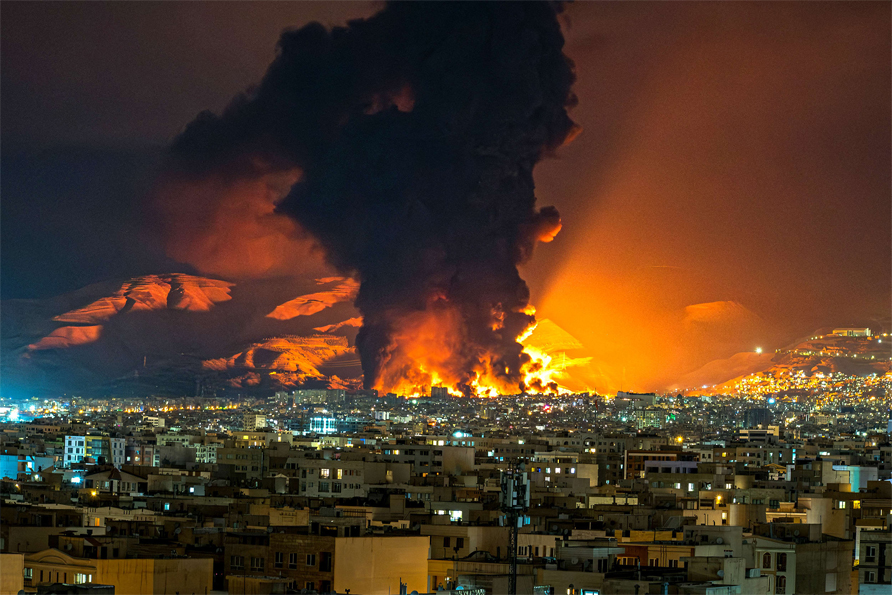
Smoke
and
flames
rise at
the site
of
airstrikes
on an
oil
depot in
Tehran
on
Saturday.
Sasan /
Middle
East
Images /
AFP via
Getty
Images |
|
|
|
|
|
 |
 |
 |
|
|
|
|
|
|
|
|
|
|
| |
G7
Response
to
Trump's
Iran War
Assistance
Request
Patricia
Romero -
International
-
Politics
Tell Us
Worldwide
News
Network
VAUX-de-CERNAY,
France -
G7
foreign
ministers
convened
in
Vaux-de-Cernay,
France,
on March
26-27,
2026,
amid the
escalating
U.S.-Israeli
war
against
Iran,
now in
its
fourth
week, to
address
President
Trump's
public
appeals
for
allied
military
and
logistical
support.
Trump,
during a
Cabinet
meeting
and
prior
virtual
G7 call,
criticized
NATO and
G7
nations
for not
"stepping
up" to
help
counter
Iran's
retaliatory
actions,
including
the
partial
closure
of the
Strait
of
Hormuz,
which
has
spiked
global
oil
prices
above
$100 per
barrel.
Allied
Skepticism
Prevails
U.S.
Secretary
of State
Marco
Rubio
faced
tough
resistance
as he
pitched
Washington's
strategy,
with
allies
expressing
deep
reservations
over the
conflict's
economic
fallout
and
offensive
operations.
British
Foreign
Secretary
Yvette
Cooper
emphasized
support
only for
"defensive
action"
while
diverging
on
broader
offensives,
and most
G7
members
labeled
the war
a
"catastrophe"
with
limited
sway
over
U.S.
decisions.
No G7
nation
offered
unambiguous
military
aid,
prioritizing
diplomacy
despite
Trump's
insistence
on
Iran's
imminent
"surrender."
Diplomatic
Push and
Rejections
Iran
rejected
a
U.S.-backed
15-point
ceasefire
plan,
countering
with
demands
for
control
over the
Strait
of
Hormuz,
as G7
leaders
urged
swift
de-escalation
and safe
shipping
passage.
Earlier
G7
statements
backed
Israel's
self-defense
but
called
for
broader
Middle
East
de-escalation,
with
figures
like
French
President
Emmanuel
Macron
warning
against
regime
change
in
Tehran.
Trump
dismissed
allied
unhappiness,
highlighting
U.S.
burdens
like
Ukraine
aid
versus
Europe's
inaction
on
Hormuz
security.
|
|
|
|
|
|
|
|
|

 I
HI TECH NEWS
I
SPORTS
I
I
HI TECH NEWS
I
SPORTS
I