|
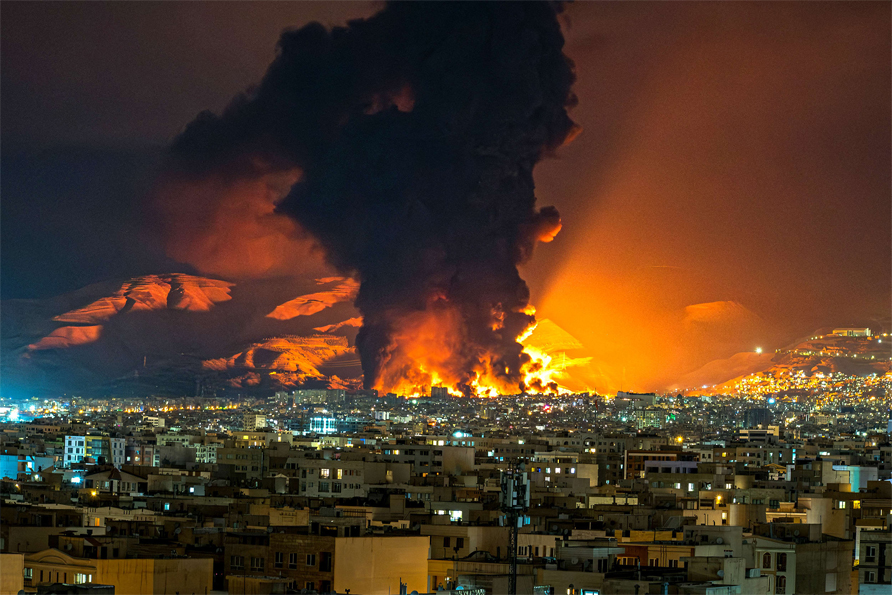
Smoke
and
flames
rise at
the site
of
airstrikes
on an
oil
depot in
Tehran
on
Saturday.
Sasan /
Middle
East
Images /
AFP via
Getty
Images |
|
|
|
|
|
 |
 |
 |
|
|
|
|
|
|
|
|
|
|
| |
Allies
Slam
Door on
Trump’s
Plea for
Iran War
Support:
‘Not Our
War’
Patricia
Romero -
International
Affairs
Tell Us
Worldwide
News
Network
WASHINGTON
-
European
allies
and NATO
partners
have
publicly
rebuffed
President
Donald
Trump’s
demands
for
military
support
in his
expanding
war
against
Iran,
insisting
the
conflict
is not
theirs
to join
despite
widespread
condemnation
of
Tehran’s
missile
strikes
on Gulf
states.
In a
series
of
pointed
statements
over the
past 48
hours,
leaders
from
London
to
Madrid
have
made
clear
they
will not
commit
warships,
troops
or
aircraft
to
police
the
Strait
of
Hormuz
or back
Washington’s
airstrikes
on
Iranian
soil.
The
rebuff
comes as
Iran’s
retaliation
has
targeted
commercial
shipping
and Gulf
infrastructure,
prompting
Trump to
escalate
calls
for a
full
coalition
response.
British
Foreign
Secretary
David
Lammy
said
Thursday
his
government
would
provide
“defensive
support”
to keep
oil
flowing
but
would
not
“escalate
this
into a
broader
war.”
Germany’s
Chancellor
Olaf
Scholz
was more
direct,
telling
reporters
in
Berlin,
“This is
not a
NATO
conflict,
and it
is not
Europe’s
war to
fight.”
Spanish
Prime
Minister
Pedro
Sánchez
echoed
the
sentiment,
rejecting
even
“temporary
deployments”
to the
Gulf and
calling
instead
for an
immediate
ceasefire.
The
coordinated
pushback
marks a
rare
public
fracture
in the
transatlantic
alliance.
Trump
had
demanded
NATO
invoke
its
collective
defense
clause
and
deploy
naval
assets
to
secure
the
Strait
of
Hormuz,
through
which 20
percent
of
global
oil
flows.
NATO
Secretary
General
Jens
Stoltenberg
responded
coolly,
stating
the
alliance
“stands
ready to
assist
with
maritime
security
but will
not
participate
in
offensive
operations
against
Iran.”
Japan
and
Australia,
key U.S.
partners
in the
Indo-Pacific,
have
also
demurred.
Tokyo
cited
its
pacifist
constitution
in
declining
to send
destroyers,
while
Canberra
limited
its
offer to
intelligence
sharing.
Even
Israel,
Washington’s
closest
regional
ally,
has
urged
restraint
on
Hormuz
to avoid
inflaming
the
wider
Arab
world.
The
reasons
for the
international
chill
are
threefold.
First,
allies
view the
U.S.–Israeli
opening
strikes
on Iran
as
lacking
clear
U.N.
authorization,
raising
legal
questions
about
the
campaign’s
legitimacy.
“Without
a
Security
Council
resolution,
this
risks
becoming
another
unauthorized
intervention,”
said
French
Foreign
Minister
Jean-Noël
Barrot.
Second,
domestic
politics
weigh
heavily.
Polls
across
Europe
show
majorities
opposed
to
joining
another
Middle
East
war,
with
memories
of Iraq
and
Afghanistan
still
raw.
Italian
Prime
Minister
Giorgia
Meloni,
a Trump
ally,
nonetheless
told
parliament
her
forces
would
focus on
“defensive
patrols
only.”
Third,
many
governments
doubt
the
strategic
payoff.
Iran’s
nuclear
sites
remain
intact,
its
proxies
continue
firing
missiles,
and
Trump’s
talk of
regime
change
alarms
even
hawkish
capitals
wary of
a
post‑Ayatollah
power
vacuum.
“We
condemn
Iran’s
aggression,
but
bombing
won’t
solve
this,”
said EU
foreign
policy
chief
Kaja
Kallas.
“Diplomacy
must
lead.”
At the
United
Nations,
more
than 100
countries
backed a
resolution
Thursday
condemning
Iran’s
Gulf
attacks
while
avoiding
any
mention
of U.S.
operations.
Russia
and
China
abstained
but
reiterated
calls
for
de‑escalation.
The
White
House
dismissed
the
allies’
stance
as
“weak,”
with
Trump
posting
on Truth
Social:
“Iran is
at war
with
us—time
for
everyone
to step
up or
step
aside.”
Pentagon
officials
privately
concede
the
coalition
gap
limits
options,
forcing
greater
reliance
on U.S.
carrier
groups
already
straining
under
repeated
Iranian
drone
assaults.
As the
war
enters
its
third
week,
the
Strait
remains
a
flashpoint.
Iran has
vowed to
mine the
waterway
if
foreign
navies
intervene,
while
commercial
insurers
have
hiked
rates
300
percent.
Allies’
refusal
to join
Trump’s
fight
leaves
Washington
shouldering
the
burden—and
the
risks—alone.
|
|
|
|
|
|
|
|
|

 I
HI TECH NEWS
I
SPORTS
I
I
HI TECH NEWS
I
SPORTS
I