|
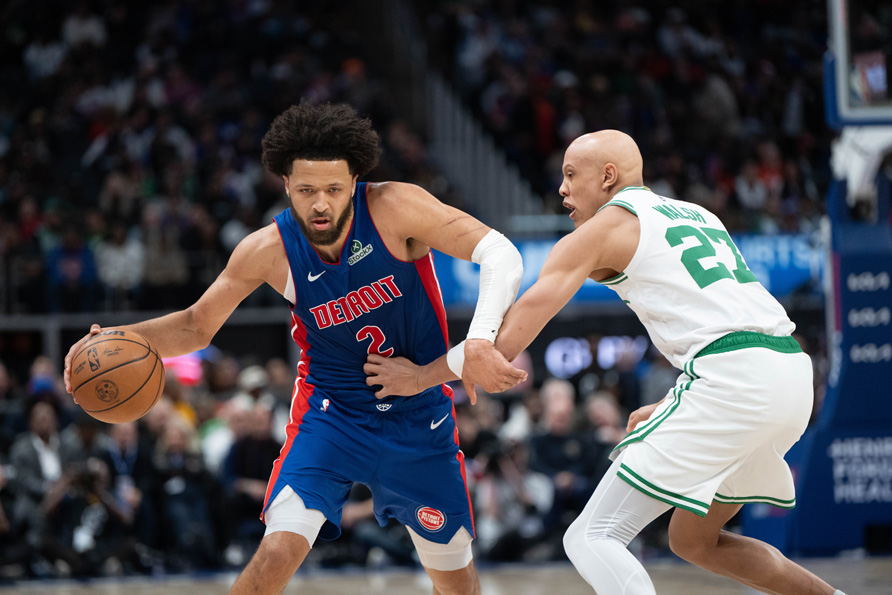
Cunningham
didn’t
sugarcoat
the
climb
ahead.
He’s
lived
the
pressure,
felt the
postseason
heat,
and
understands
the
emotional
discipline
required
to
survive
it.
“It’s
gonna be
hard,
especially
when
you’re
on the
road in
those
environment
settings,”
he said.
(Photo
by
Montez
Miller/Tell
Us USA
News
Network) |
|
|
|
|
|
 |
 |
 |
|
|
|
|
|
|
|
|
|
|
| |
Detroit
Enters
2026–27
With
Renewed
Identity,
Rising
Expectations,
and a
Clear
Mission
Bunky
McFadden
- Sports
Tell Us
Detroit
News
Bureau
DETROIT
— The
Detroit
Pistons
didn’t
bother
tiptoeing
into the
2026–27
season.
They
kicked
the door
in.
Three
years
into the
J.B.
Bickerstaff
era,
Detroit
is done
talking
about
potential,
timelines,
and
incremental
growth.
This is
a
franchise
openly
hunting
the
Larry
O’Brien
Trophy,
and on
Media
Day,
both the
head
coach
and his
franchise
cornerstone
made it
clear:
the
excuses
are
gone,
the
window
is open,
and the
standard
is
non‑negotiable.
Bickerstaff,
steady
as ever,
didn’t
flinch
when
asked
about
the
noise
swirling
around
the
Eastern
Conference
— the
arms
race,
the
offseason
headlines,
the
pundits
dissecting
Detroit’s
ceiling.
He cut
straight
through
it.
“It’s
not
about
everyone
else,”
he said,
his tone
firm
enough
to quiet
the
room.
“What
our guys
have
done a
great
job with
is
staying
present
and
staying
in the
moment.
All we
think
about
is,
‘What
are we
going to
do today
that’s
going to
make us
a better
basketball
team?’
We don’t
think
about 10
games
down the
road—we
focus on
our
standard.”
In a
league
obsessed
with
narratives,
Bickerstaff
made it
clear
Detroit
won’t be
dragged
into
anyone
else’s
storyline.
That
standard
begins
with
Cade
Cunningham,
the calm
heartbeat
of a
team
that
believes
it’s
ready to
punch
above
its
weight.
Cunningham
didn’t
sugarcoat
the
climb
ahead.
He’s
lived
the
pressure,
felt the
postseason
heat,
and
understands
the
emotional
discipline
required
to
survive
it.
“It’s
gonna be
hard,
especially
when
you’re
on the
road in
those
environment
settings,”
he said.
“So it
comes
down to
controlling
our
emotions,
controlling
what we
can
control,
and
playing
the best
brand of
basketball
we can.
We built
a real
bond
here,
and we
know
what
we’re
capable
of when
we stick
together.”
Detroit’s
blueprint
is no
mystery.
Cunningham
runs the
offense
through
high
pick‑and‑roll
actions,
flanked
by
shooters
who
stretch
defenses
to their
breaking
point.
Duncan
Robinson,
Kevin
Huerter,
and
Isaiah
Joe give
the
Pistons
the kind
of
spacing
they’ve
lacked
for
years.
Jalen
Duren
and
newcomer
John
Collins
provide
vertical
gravity
that
forces
opponents
into
impossible
choices:
collapse
on
Cunningham’s
drives
or
surrender
clean
perimeter
looks.
Defensively,
Detroit
leans
into its
youth
and
length.
Ausar
Thompson
and Ron
Holland
II are
built
for
modern
basketball
—
switchable,
relentless,
and
disruptive.
Their
pressure
fuels a
transition
attack
that can
bury
teams
before
they’ve
even
crossed
half
court.
Add
veterans
like
Collins
and
Taurean
Prince,
and
Detroit
suddenly
has the
flexibility
to
toggle
between
bruising,
rim‑protecting
lineups
and
stretch‑four
spacing
without
losing
its
identity.
But the
Pistons
know the
truth:
none of
it
matters
if they
can’t
execute
in the
final
six
minutes
of a
playoff
game.
Transition
points
dry up.
Matchups
tighten.
Every
possession
becomes
a
referendum
on
discipline.
That’s
the leap
Detroit
hasn’t
made yet
— and
the one
they
believe
they’re
finally
ready
for.
The
Pistons
open the
season
October
20 at
Little
Caesars
Arena
against
the
Boston
Celtics,
a
fitting
test for
a team
intent
on
proving
it
belongs
in the
league’s
top
tier.
Detroit
isn’t
whispering
about
contention
anymore.
They’re
declaring
it.
And for
the
first
time in
a long
time,
they
look
ready to
back it
up.
This
Tell Us
USA News
Network
report
is
produced
in part
by Ai
and can
make
mistakes.
Please
contact
and let
us know
of any
errors
you may
find.
info@tellususa.com
|
|
|
|
|
|
|
|
|

 I
HI TECH NEWS
I
SPORTS
I
I
HI TECH NEWS
I
SPORTS
I