|
|
|
|
|
|
|
|
|
|
|
|
Younger,
Independent
Voters
Drive
El-Sayed
Surge
Over
Stevens
in
Senate
Race
Li Haung
-
National-Politics
Tell Us
Detroit
News
Bureau
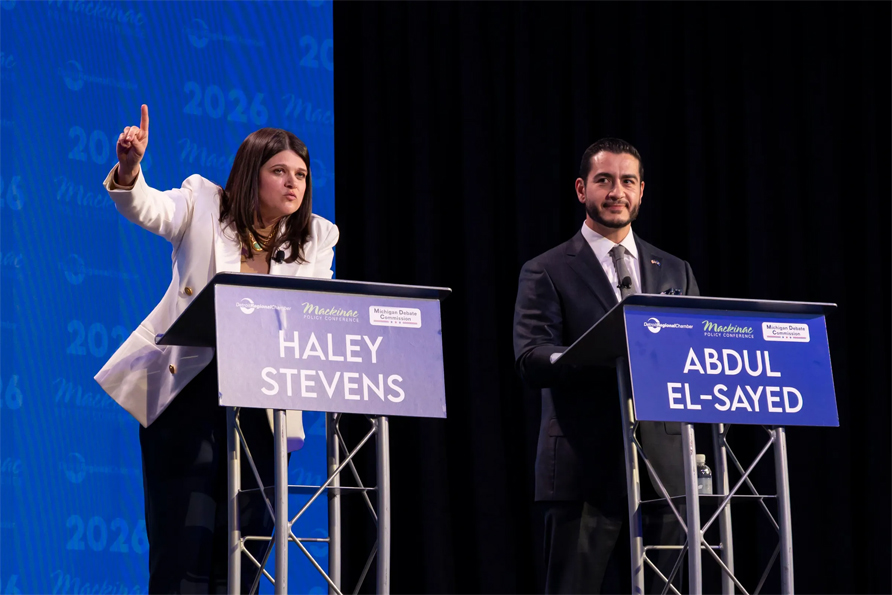
DETROIT
- Recent
polling
shows
Abdul
El-Sayed
holding
a clear
lead
over
Rep.
Haley
Stevens
in
Michigan’s
Democratic
Senate
primary,
with his
populist,
“money-out-of-politics”
and
Medicare-for-all
message
resonating
more
strongly—especially
with
younger,
independent,
and
Black
voters—while
Stevens’
centrist,
electability-focused
pitch
(backed
by major
party
leaders
and
pro-Israel
groups)
polls
better
among
older,
suburban
moderates
but lags
overall.
Polling
snapshot
heading
into
today’s
vote:
Emerson
College
(late
July)
found
El-Sayed
at 54%
and
Stevens
at 39%,
with 6%
undecided
and
leaning
undecided
breaking
57–41
for
El-Sayed.
Another
late-July
Emerson
release
cited by
some
outlets
showed
El-Sayed
at 57%
and
Stevens
at 41%.
The
Decision
Desk HQ
primary
average
as of
August 4
puts
El-Sayed
at 53%
and
Stevens
at 40%,
a
13-point
lead. An
early
July
Tavern
Research
poll
showed a
statistical
tie,
with
Stevens
at 42%
and
El-Sayed
at 41%,
before
El-Sayed’s
surge.
General-election
trial
heats
against
Mike
Rogers
are
mixed,
with
several
polls
showing
El-Sayed
performing
as well
or
better
than
Stevens
against
Rogers,
while
others
show
Stevens
narrowly
ahead or
tied.
How
their
messages
map onto
the
numbers:
Abdul
El-Sayed’s
gains
are tied
to a
message
emphasizing
economic
populism—“money
out of
politics,
money in
your
pocket,”
Medicare
for All,
and
curbing
corporate
influence—along
with a
foreign-policy
break
calling
for an
end to
unconditional
U.S.
military
aid to
Israel
and
labeling
Gaza a
“genocide,”
which
has
drawn
strong
support
from
progressive
and
anti-war
voters.
Emerson’s
pollster
noted a
stark
age
split:
voters
under 50
break
for
El-Sayed
by 42
points
(67–25),
while
those
over 60
favor
Stevens
by 14
(53–39).
Independents
also
break
for
El-Sayed
by 27
points
(60–33),
and
Democrats
by 9
(50–41).
Haley
Stevens’
messaging
leans on
an
electability
argument,
positioning
herself
as the
centrist
who can
flip or
hold
seats
and beat
Republicans
in
November,
with
endorsements
from
party
leadership.
She
emphasizes
a
pro-Israel,
two-state
solution
position
that
aligns
with
major
pro-Israel
donors,
criticizing
Netanyahu
but
supporting
Israel’s
right to
exist.
Her
policy
focus
includes
more
targeted
emphasis
on
issues
like the
electric
grid,
environmental
policy,
and tax
concerns—appealing
to
suburban
moderates.
Polling
on “who
is more
electable”
is
mixed:
some
establishment-linked
polls
show
El-Sayed
behind
Rogers
by
several
points,
while
others
put him
ahead or
show
Stevens
slightly
ahead or
tied.
What the
polls
say
about
vulnerability
to
attacks:
Internal
and
outside
polling
cited in
the race
suggests
El-Sayed
is
comparatively
resilient
to
negative
messaging.
One
memo-style
poll
found a
majority
of
voters
found
attacks
on
Stevens—as
an
AIPAC-tied
establishment
figure—convincing,
while a
majority
found
attacks
on
El-Sayed
less
convincing
as a
reason
to vote
against
him.
That
aligns
with the
broader
narrative
that El-Sayed’s
anti-establishment
brand
insulates
him from
the very
“establishment”
criticisms
Stevens
and her
allies
have
deployed.
Bottom
line for
today:
Heading
into
today’s
primary,
the
polling
consensus
is that
El-Sayed’s
populist,
anti-corporate,
and
foreign-policy-break
message
has
outpaced
Stevens’
moderate,
electability-centered
pitch in
the
Democratic
primary
electorate—especially
among
younger,
independent,
and
Black
voters—giving
him a
double-digit
lead in
most
late
surveys.
Stevens
retains
strength
with
older,
suburban
moderates,
but the
topline
numbers
suggest
her
message
has not
closed
the gap
after
El-Sayed’s
mid-to-late
July
surge.
|
|
|
|
|
|
|
|
|




 I
HI TECH NEWS
I
SPORTS
I
I
HI TECH NEWS
I
SPORTS
I