|
|
|
|
|
|
 |
|
|
|
|
|
The
Anti-Weaponization
Fund:
Taxpayer
Relief
or
Political
Slush
Fund?
Ashley
Roberts
-
Capitol
Hill
Tell Us
USA News
Network
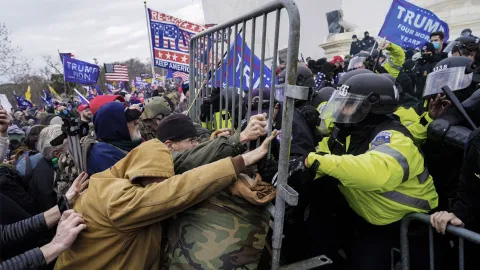
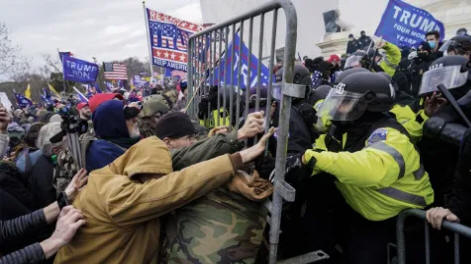
WASHINGTON
- The
Trump
administration’s
newly
established
$1.776
billion
"Anti-Weaponization
Fund" is
drawing
intense
bipartisan
scrutiny.
The
central
flashpoint:
administration
officials
have
explicitly
refused
to rule
out
taxpayer-funded
payouts
to
January
6
rioters—including
those
convicted
of
assaulting
police
officers
who
later
received
presidential
clemency.
Here is
a
breakdown
of how
the fund
works,
the
political
fallout,
and the
battle
lines
being
drawn in
Congress.
1. How
the Fund
Was
Created
The
Justice
Department
(DOJ)
launched
the fund
as part
of a
legal
settlement
resolving
Donald
Trump’s
private
lawsuit
against
the IRS
over the
leak of
his tax
records.
The
Funding
Source:
The
$1.776
billion
will be
drawn
from the
federal
Judgment
Fund—a
permanent
congressional
appropriation
used to
pay
claims
against
the
government—and
transferred
into a
dedicated
account
within
60 days.
The
Timeline:
The fund
is
structured
to
operate
through
late
2028,
spanning
the
remainder
of the
current
presidential
term.
2. Vague
Rules &
The
January
6
Flashpoint
The
administration
has
intentionally
kept
eligibility
criteria
broad,
framing
the
program
as a
remedy
for
citizens
targeted
by
politically
motivated
federal
actions.
"Anybody
in this
country
can
apply if
they
believe
they
were a
victim
of
weaponization."
— Acting
Attorney
General
Todd
Blanche,
testifying
before
senators.
When
pressed
by
lawmakers,
both
Blanche
and Vice
President
JD Vance
declined
to
exclude
January
6
defendants.
Instead,
they
maintained
that a
five-member
commission
appointed
by the
Attorney
General
will
review
applications
on a
case-by-case
basis to
determine
who
qualifies
and how
much
they
receive.
Critics,
including
ethics
watchdogs
and
Democrats,
warn
that
without
explicit
guardrails,
the
program
will
effectively
function
as a
taxpayer-funded
slush
fund for
political
allies.
3.
Cracks
in the
GOP
Front
While
the
White
House
frames
the fund
as a
blow
against
deep-state
overreach,
the
initiative
has
split
congressional
Republicans.
Many are
caught
between
a
reluctance
to
publicly
break
with
Trump
and deep
discomfort
over the
political
optics.
Lawmakers:
Sen.
John
Thune
R-SD
(Majority
Leader)
Stated
plainly
that he
is "not
a big
fan" of
the
program.
Sen.
Bill
Cassidy
R-LA
Warned
that
voters
care
about
household
costs,
not a
"slush
fund"
without
legal
precedent.
Rep. Don
Bacon
R-NE
Called
the
setup a
clear
conflict
of
interest
and
demanded
an
independent
arbitrator
to
prevent
bias.
Sen.
Chris
Van
Hollen
D-MD
Denounced
the plan
as "pure
theft of
public
funds"
and
"obscene."
4. The
Legislative
Battle
Ahead
Capitol
Hill is
moving
fast to
restrict
how this
money
can be
spent,
turning
the fund
into a
major
legislative
battleground.
Senate
Defunding
Effort:
Senators
Peter
Welch
(D-VT),
Alex
Padilla
(D-CA),
and
Sheldon
Whitehouse
(D-RI)
have
introduced
a bill
to
explicitly
prohibit
federal
funds
from
compensating
January
6
rioters,
specifically
barring
payments
to
anyone
convicted
of
assaulting
law
enforcement.
House
Friction:
House
Democrats
recently
forced a
vote on
an
amendment
to
dismantle
the fund
and
mandate
strict
disclosure
of any
payouts.
House
Republicans
united
to
defeat
the
amendment.
Democrats
are
already
using
that
vote to
argue
that
even
quiet
GOP
critics
are
enabling
the
program.
The
establishment
of the
$1.776
billion
"Anti-Weaponization
Fund"
has
triggered
deep
political
ramifications,
shifting
the
battle
lines in
Washington
and
creating
a
complex
tactical
landscape
for both
parties.
The
primary
political
fallout
spans
several
key
areas:
1. A
High-Stakes
Dilemma
for
Congressional
Republicans
The fund
has
exposed
a rare
public
rift
among
Republicans,
forcing
lawmakers
to
choose
between
breaking
with the
White
House or
defending
highly
unpopular
optics.
• The
Trap for
Moderates
and
Leadership:
High-profile
Republicans
like
Senate
Majority
Leader
John
Thune
and
Senator
Bill
Cassidy
have
openly
distanced
themselves
from the
program.
Defending
taxpayer
payouts
to
individuals
convicted
of
violent
crimes—even
those
who
later
received
presidential
clemency—is
a
massive
liability
in
moderate
and
swing
districts.
• The
Voting
Squeeze:
House
Democrats
are
actively
forcing
votes to
dismantle
the
fund.
Because
many
Republicans
are
voting
down
these
amendments
to avoid
a
primary
backlash
from
Trump’s
base,
Democrats
are
weaponizing
those
votes,
labeling
the
entire
GOP as
enablers
of an
"insurrectionist
slush
fund."
2. A
Ready-Made
Campaign
Weapon
for
Democrats
For
Democrats,
the fund
provides
a
powerful,
unifying
narrative
ahead of
upcoming
election
cycles,
shifting
the
focus
from
inflation
and
household
costs
back to
democratic
norms
and
political
corruption.
• The
"Theft"
Narrative:
Democratic
lawmakers
are
framing
the fund
not as a
standard
legal
settlement,
but as
"pure
theft of
public
funds"
(in the
words of
Sen.
Chris
Van
Hollen)
and an
unprecedented
act of
self-enrichment
for the
president's
political
network.
•
Consolidating
the
Base:
The
issue
allows
Democrats
to
re-energize
their
base by
directly
linking
taxpayer
dollars
to the
events
of
January
6, a
potent
fundraising
and
voter-turnout
driver.
3.
Codifying
a New
Model of
"Transactional
Politics"
Political
scientists
and
watchdogs
note
that the
fund
alters
the
traditional
relationship
between
a
president
and
their
supporters.
•
Precedent
for
"Reparations":
By
utilizing
the
federal
Judgment
Fund to
potentially
compensate
criminal
defendants,
critics
argue
the
administration
is
establishing
a
dangerous
precedent.
It
signals
to
political
allies
that the
financial
and
legal
risks of
aggressive
political
action
can be
completely
neutralized
by the
state
after
the
fact.
•
Bypassing
Congress:
Because
the
money
flows
from the
Judgment
Fund—a
permanent
Treasury
appropriation—the
White
House
bypassed
the
traditional
congressional
appropriations
process
entirely.
This
significantly
weakens
the
"power
of the
purse,"
a core
constitutional
check
Congress
holds
over the
executive
branch.
4.
Moving
the
Battle
to the
Federal
Courts
Because
legislative
fixes
face an
uphill
battle
in a
divided
Congress,
the
political
fight
has
rapidly
spilled
into the
judicial
system.
• The
Lawsuit
Shield:
High-profile
Capitol
Police
officers,
including
Daniel
Hodges
and
Harry
Dunn,
have
filed a
federal
lawsuit
to block
the
payouts,
arguing
the fund
acts as
a
state-sponsored
incentive
for
political
violence.
• The
Standing
Battle:
The
legal
warfare
will
largely
hinge on
"standing"—whether
individual
officers
or
groups
of
lawmakers
can
prove
direct
harm
from the
fund's
existence.
If a
judge
allows
the suit
to
proceed,
it will
keep the
details
of the
fund
tied up
in
highly
publicized
legal
discovery
for
months.
The Big
Picture:
The
administration
is using
the fund
to
reinforce
its core
narrative
that the
"Deep
State"
has
targeted
conservatives,
effectively
institutionalizing
that
grievance
into
federal
policy.
In doing
so, they
have
handed
Democrats
a
massive
political
target,
while
leaving
congressional
Republicans
highly
vulnerable
to
accusations
of
enabling
taxpayer-funded
payouts
for
political
violence.
The
Bottom
Line:
The true
scope
and
impact
of the
Anti-Weaponization
Fund
will
depend
entirely
on the
five-member
commission.
Until
they
release
detailed
eligibility
standards,
the
program
remains
a highly
volatile
political
liability
for
Republicans
and a
potent
weapon
for
Democrats.
|
|
|
|
|
|
|
|
|




 I
HI TECH NEWS
I
SPORTS
I
I
HI TECH NEWS
I
SPORTS
I