|
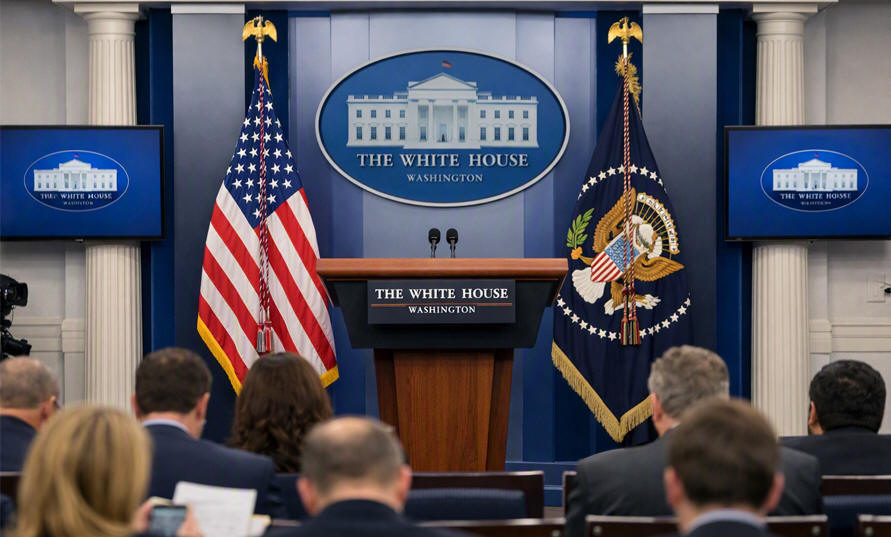
Reporters
for CNN,
MS NOW
and
Politico
returned
to the
White
House on
Thursday
after
U.S.
District
Judge
Timothy
J. Kelly
ordered
the
Trump
administration
to
immediately
restore
their
hard-pass
credentials
and
temporarily
blocked
enforcement
of
President
Donald
Trump’s
ban.(Tell
Us USA
Ai
image) |
|
|
|
|
|
 |
 |
 |
|
|
|
|
|
|
|
|
|
|
| |
Judge
Orders
White
House to
Restore
Access
for CNN,
MS NOW
and
Politico
Diane
Simpson
- White
House
Correspondent
Tell Us
USA News
Network
WASHINGTON
—
Reporters
for CNN,
MS NOW
and
Politico
returned
to the
White
House on
Thursday
after
U.S.
District
Judge
Timothy
J. Kelly
ordered
the
Trump
administration
to
immediately
restore
their
hard-pass
credentials
and
temporarily
blocked
enforcement
of
President
Donald
Trump’s
ban.
Kelly’s
14-day
temporary
restraining
order
found
that the
three
news
organizations
were
likely
to
prevail
on their
claim
that the
administration
revoked
their
access
without
constitutionally
required
due
process.
The
judge
also
rejected
the
White
House’s
asserted
national-security
rationale,
finding
that the
record
did not
support
the
contention
that
stripping
the
outlets’
credentials
would
protect
national
security.
The
dispute
erupted
after
Trump
announced
Sept. 18
that
CNN, MS
NOW and
Politico
would be
barred
from
White
House
grounds,
accusing
the
outlets
of false
and
negative
coverage.
The
three
organizations
sued
Monday,
arguing
that the
administration
had
retaliated
against
constitutionally
protected
newsgathering
and
speech.
But
the
administration’s
compliance
was
neither
immediate
nor
smooth.
Despite
Kelly’s
overnight
directive
ordering
officials
to
immediately
return,
reinstate
and
restore
the
credentials,
reporters
from the
affected
outlets
were
initially
turned
away at
White
House
gates
Thursday
morning.
The
outlets
sought
emergency
court
intervention,
saying
the
administration
had
continued
to deny
access
in
direct
conflict
with the
judge’s
order.
The
White
House
later
told the
court
that
press
officials
had been
directed
to
restore
access
at 7:10
a.m.,
that the
Secret
Service
reactivated
badges
at
roughly
9:07
a.m.,
and that
recovered
badges
were
made
available
at the
gate
before
10 a.m.
Reporters
from
CNN, MS
NOW and
Politico
were
allowed
back
onto the
grounds
around
midday.
The
delay
sharpened
the
confrontation.
It
transformed
what had
been
framed
by the
White
House as
a
dispute
over
access
into a
more
serious
question:
whether
the
executive
branch
would
promptly
obey a
federal
court
order
protecting
the
ability
of
journalists
to cover
the
presidency.
The
ruling
does not
end the
case. It
preserves
the
outlets’
access
while
the
underlying
constitutional
challenge
proceeds,
with the
temporary
order
set to
remain
in
effect
for 14
days
unless
modified
by the
court.
CNN, MS
NOW and
Politico
must
file
their
motion
for a
preliminary
injunction
by Sept.
28; the
administration’s
response
is due
Oct. 2,
followed
by the
plaintiffs’
reply on
Oct. 5.
Still,
Kelly’s
ruling
marks an
early
and
consequential
setback
for the
White
House.
The
court
did not
rule
that the
press
has an
unrestricted
right to
enter
every
part of
the
executive
complex
or
participate
in every
presidential
event.
Instead,
it
concluded
that
once the
government
grants
regular
access
through
hard
passes,
it
cannot
selectively
revoke
that
access
as
punishment
without
adequate
procedures
and a
lawful
justification.
That
distinction
is
central.
The
First
Amendment
does not
compel
favorable
coverage.
It does,
however,
limit
the
government’s
ability
to use
official
access
as
leverage
against
journalists
whose
reporting
it
dislikes.
The
confrontation
echoes
earlier
White
House
press-access
fights,
but this
case has
broader
implications
because
it
involves
three
major
outlets
barred
together
after
criticism
of the
president’s
coverage.
The
collective
nature
of the
action
made it
more
difficult
for the
administration
to
characterize
the
matter
as an
isolated
credential
dispute
involving
a single
reporter’s
conduct.
The
White
House
had
argued
that
access
is a
privilege,
not a
right.
That
formulation
captures
part of
the
legal
reality:
physical
access
to the
White
House
can be
regulated
for
security
and
operational
reasons.
But the
court’s
order
makes
clear
that the
government
cannot
wield
that
authority
arbitrarily
or
discriminate
against
news
organizations
because
their
reporting
is
unwelcome.
For
now, the
reporters
are back
inside.
The
larger
battle
will
determine
whether
a White
House
can turn
press
credentials
into a
political
loyalty
test —
and
whether
the
courts
will
draw a
firm
line
before
that
practice
becomes
normalized.
How We
Got
Here:
Anatomy
of a
Retaliation
Trump
Fires
the
First
Shot
Friday,
Sept. 18
Trump
announces
on Truth
Social
that
CNN, MS
NOW, and
Politico
are
banned
"effective
immediately"
over
cumulative
"lies
and
fiction."
The
impulse
decision
catches
high-level
White
House
aides
completely
off
guard.
Secret
Service
Confiscates
Badges
Saturday,
Sept. 19
Uniformed
Secret
Service
officers
carry
out the
order,
seizing
hard
passes
from
reporters
at the
gates.
Stripped
of
access,
the
banned
networks
are
forced
to
broadcast
from the
cold
corner
of
Pennsylvania
Avenue
and 17th
Street.
Outlets
Sue;
Press
Corps
Fights
Back
Monday,
Sept. 21
The
three
outlets
file a
joint
federal
lawsuit
alleging
First
and
Fifth
Amendment
violations.
In a
rare
display
of
solidarity,
major TV
networks
pull the
plug on
joint
pool
video
coverage
of
presidential
events.
DOJ
Struggles
in Court
Wednesday,
Sept. 23
At a
tense
45-minute
hearing,
DOJ
lawyer
Michael
Velchik
scrambles
to frame
access
as a
"privilege"
while
floating
national
security
concerns.
Judge
Kelly
openly
mocks
the
White
House's
sudden
discovery
of "due
process"
letters
sent to
the
networks
only
after
they
filed
suit.
The
Federal
Order
Drops
Thursday,
Sept. 24
Judge
Kelly
issues
the
14-day
restraining
order,
ordering
hard
passes
restored.
Compliance
at the
White
House
complex
remains
spotty
by
daybreak.
The Real
Battle
Ahead
Make
no
mistake:
This
fight is
far from
over.
The
administration
tried a
quick
maneuver
on
Tuesday
by
sending
letters
to the
banned
outlets
accusing
them of
"decorum
violations"
and
setting
a
deadline
of
Friday
afternoon
for the
newsroom
executives
to
appeal.
That
looks
like a
transparent
attempt
to
manufacture
a fake
paper
trail so
they can
turn
around
next
week and
ban them
all over
again
under
the
guise of
"due
process."
Because
temporary
restraining
orders
generally
can't be
appealed,
the
administration
is
backed
into a
corner
for the
next 14
days
while
both
sides
prepare
for the
preliminary
injunction
battle.
If the
White
House
continues
to bar
journalists
at the
gate in
defiance
of a
federal
court
order
today,
expect
Boutrous
and his
legal
team to
march
straight
back
into
Judge
Kelly's
courtroom
to
demand
contempt
proceedings.
The
administration
is
testing
how far
it can
bend the
rules—and
the
press
corps
isn't
backing
down.
This
Tell Us
USA News
Network
report
is
produced
in part
by Ai
and can
make
mistakes.
Please
contact
and let
us know
of any
errors
you may
find.
info@tellususa.com
|
|
|
|
|
|
|
|
|

 I
HI TECH NEWS
I
SPORTS
I
I
HI TECH NEWS
I
SPORTS
I