|
|
|
|
|
|
|
|
|
|
|
|
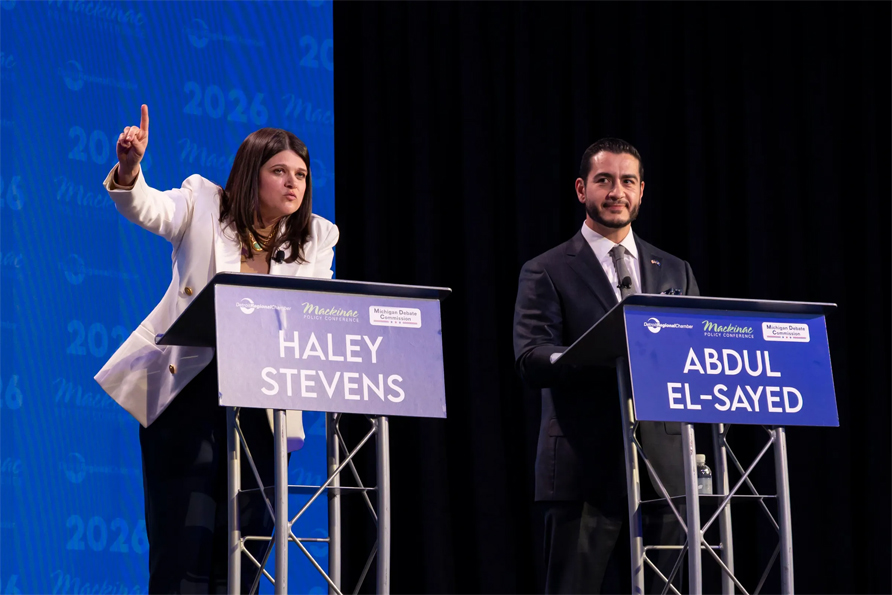
El-Sayed
defeats
Haley
Stevens
in a
defining
Michigan
Senate
primary
Li Haung
-
National-Politics
Tell Us
USA News
Network
DETROIT
- Abdul
El-Sayed
narrowly
defeated
U.S.
Rep.
Haley
Stevens
in
Michigan’s
Democratic
primary
for U.S.
Senate,
securing
a
hard-fought
victory
that
underscores
the
evolving
ideological
currents
within
the
party
and sets
the
stage
for a
high-stakes
general
election
contest.
El-Sayed,
a
progressive
former
Detroit
health
director
and
gubernatorial
candidate,
edged
Stevens
by a
slim
margin
after a
closely
watched
race
that
exposed
a deep
divide
between
the
Democratic
Party’s
establishment
wing and
its
ascendant
progressive
base.
With
turnout
robust
across
urban
centers
and
college-heavy
districts,
El-Sayed’s
campaign
successfully
mobilized
younger
voters
and
communities
of
color,
particularly
in Wayne
County,
where
his
margins
proved
decisive.
Stevens,
a
centrist
lawmaker
with
strong
ties to
organized
labor
and the
Biden-era
economic
agenda,
performed
well in
suburban
Detroit
and
parts of
Oakland
County
but was
unable
to
overcome
El-Sayed’s
advantage
in
Detroit
and
other
Democratic
strongholds.
Her
campaign
leaned
heavily
on
experience
in
Congress
and a
pragmatic
message
centered
on
manufacturing,
workforce
development,
and
bipartisan
appeal—an
approach
that
ultimately
fell
just
short in
a
primary
electorate
that
appeared
more
energized
by calls
for
structural
reform.
The race
was
marked
by sharp
contrasts
in tone
and
policy
emphasis.
El-Sayed
campaigned
on
Medicare
for All,
student
debt
relief,
and
aggressive
climate
action,
framing
his
candidacy
as part
of a
broader
generational
shift
within
the
party.
Stevens,
by
contrast,
positioned
herself
as a
results-driven
legislator
capable
of
delivering
incremental
progress
and
maintaining
Democratic
competitiveness
in swing
regions
critical
to
general
election
success.
Political
observers
note
that El-Sayed’s
victory
reflects
both
Michigan’s
changing
Democratic
coalition
and a
national
trend in
which
progressive
candidates
are
increasingly
competitive
in
statewide
races,
particularly
in
open-seat
contests.
However,
the
narrow
margin
also
highlights
lingering
tensions
within
the
party,
raising
questions
about
unity
heading
into
November.
“El-Sayed’s
win is
significant,
but it’s
not a
landslide
mandate,”
said one
Michigan-based
political
strategist.
“It’s a
signal
that the
base is
energized
by
progressive
ideas,
but also
that a
substantial
portion
of
Democratic
voters
still
prioritize
electability
and
moderation.”
Looking
ahead,
El-Sayed
will
need to
consolidate
support
from
Stevens’
backers
and
appeal
to
independent
voters
in a
state
that
remains
politically
divided.
Republicans
are
expected
to
target
his
progressive
platform
as out
of step
with
moderate
voters,
setting
up a
general
election
battle
that
could
hinge on
turnout,
economic
messaging,
and the
national
political
environment.
For
Democrats,
the
outcome
serves
as both
a test
and a
warning:
enthusiasm
within
the base
can
drive
primary
victories,
but
coalition-building
will be
essential
in a
state
where
elections
are
often
decided
by
razor-thin
margins.
|
|
|
|
|
|
|
|
|




 I
HI TECH NEWS
I
SPORTS
I
I
HI TECH NEWS
I
SPORTS
I