|
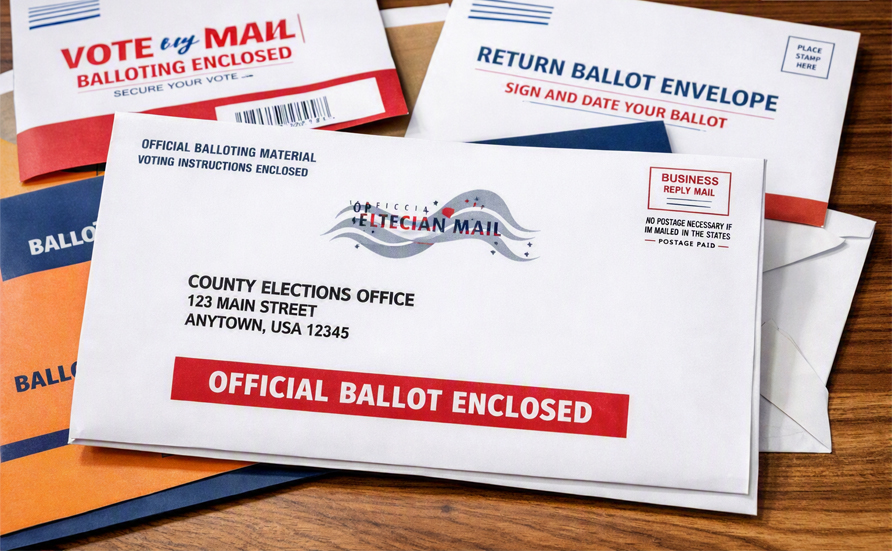
Election
officials
and
voting-rights
advocates
argued
that
putting
the
changes
into
effect
so close
to
Election
Day
would
disrupt
ballot
distribution
and
could
prevent
eligible
voters
from
receiving
or
returning
ballots
in time.
Ballots
have
already
been
mailed
in at
least
some
states,
including
North
Carolina
and
Alabama.
(Tell Us
USA Ai
image) |
|
|
|
|
|
 |
 |
 |
|
|
|
|
|
|
 |
|
|
The
court
did not
disclose
a formal
vote
count in
its
unsigned
order,
issued
through
the
court’s
emergency
docket.
The
immediate
result
is that
the
federal
rule
cannot
be
enforced
for the
2026
midterms
while
litigation
continues. |
| |
Court
Halts
New
Federal
Mail-Ballot
Requirements
Ahead of
Midterms
Marc
Kennedy
-
National-Politics
Tell Us
USA News
Network
WASHINGTON
- The
U.S.
Supreme
Court
has
refused
to let
the
Trump
administration
immediately
enforce
new U.S.
Postal
Service
requirements
for
mail-in
ballots,
leaving
a
lower-court
injunction
in place
less
than two
months
before
the
November
midterm
elections.
In a
brief
unsigned
emergency
order
issued
Monday,
the
court
said the
federal
government
was
unlikely
to
succeed
on the
merits
of its
challenge
to the
preliminary
injunction
imposed
by a
federal
judge in
Boston.
The
ruling
means
states
and
local
election
offices
may
continue
using
their
existing
vote-by-mail
procedures
while
the
broader
legal
dispute
proceeds.
The
administration
had
asked
the
justices
to lift
the
nationwide
block on
a
recently
finalized
USPS
rule
that
would
have
required
mail-ballot
envelopes
to meet
new
design
and
tracking
standards.
Among
other
provisions,
the rule
called
for
unique
barcodes
on
envelopes
and
required
state
and
local
election
officials
to
submit
information
on
mail-ballot
recipients
through
a USPS
online
portal.
Election
officials
and
voting-rights
advocates
argued
that
putting
the
changes
into
effect
so close
to
Election
Day
would
disrupt
ballot
distribution
and
could
prevent
eligible
voters
from
receiving
or
returning
ballots
in time.
Ballots
have
already
been
mailed
in at
least
some
states,
including
North
Carolina
and
Alabama.
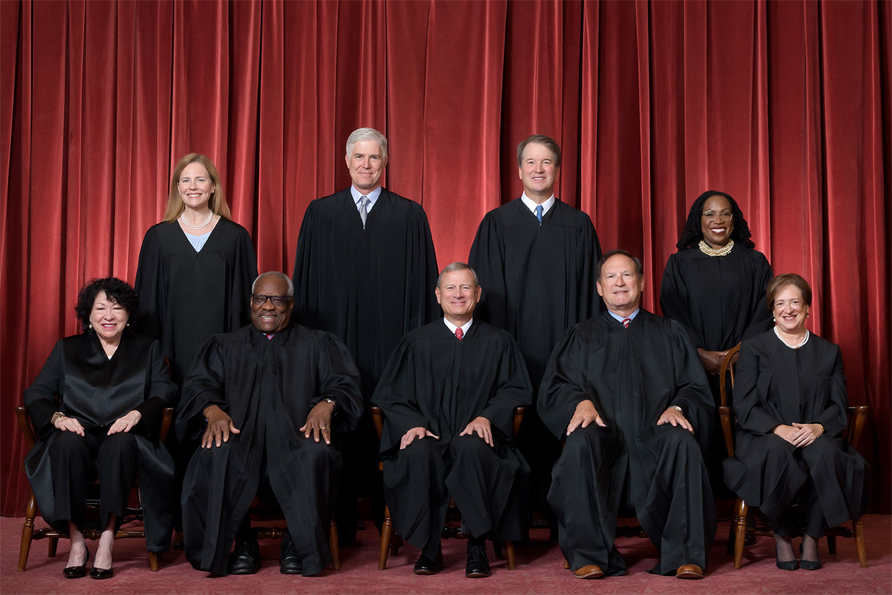
Justice
Brett
Kavanaugh
wrote
separately
to
concur
with the
court’s
decision.
He said
state
and
local
election
officials
did not
have
sufficient
time to
reasonably
implement
the new
rule
before
the
election,
according
to
reports
on the
order.
Justices
Samuel
Alito
and
Clarence
Thomas
dissented.
They
argued
that the
states
challenging
the
policy
were
unlikely
to
establish
that the
USPS
rule was
unlawful.
The
court
did not
disclose
a formal
vote
count in
its
unsigned
order,
issued
through
the
court’s
emergency
docket.
The
immediate
result
is that
the
federal
rule
cannot
be
enforced
for the
2026
midterms
while
litigation
continues.
Monday’s
decision
reverses
the
administration’s
recent
momentum
in
related
litigation.
In
August,
the
Supreme
Court
lifted
an
earlier
injunction
against
parts of
President
Donald
Trump’s
mail-voting
executive
order,
finding
at that
stage
that the
states’
challenge
was
premature
because
the
government
had not
yet
taken
concrete
implementing
actions.
The
court
emphasized
then
that its
ruling
did not
decide
whether
any
eventual
federal
measures
would be
lawful.
After
the USPS
finalized
its
implementing
rule,
states
and
voting-rights
groups
renewed
their
legal
challenge.
A
federal
district
judge
blocked
the
rule,
and the
1st U.S.
Circuit
Court of
Appeals
declined
to pause
that
injunction
before
the
Supreme
Court
acted.
The
appeals
court
cited
the risk
of voter
disenfranchisement
if the
rules
were
imposed
during
the
active
election
period.
The
decision
does not
permanently
strike
down the
Postal
Service
rule or
resolve
the
wider
dispute
over the
administration’s
authority
to
impose
new
mail-voting
requirements.
Instead,
it
preserves
the
status
quo for
this
year’s
elections
and
returns
the
underlying
case to
the
lower
courts.
For
voters,
the
practical
effect
is that
states
can
continue
administering
mail and
absentee
voting
under
their
current
systems
rather
than
switching
to the
proposed
USPS
envelope,
barcode
and
data-submission
requirements
during
the
final
stretch
of the
midterm
campaign.
|
|
|
|
|
|
|
|
|

 I
HI TECH NEWS
I
SPORTS
I
I
HI TECH NEWS
I
SPORTS
I