|
|
|
|
|
|
 |
|
|
Transportation
Secretary
Sean
Duffy
quickly
pointed
to
congressional
funding
shortfalls
and
L3Harris,
the
contractor
involved
in
upgrade
work
preceding
the
outage.
His
explanations,
however,
raised
another
question:
How
could a
technical
breakdown
involving
critical
aviation
infrastructure
trigger
a
disruption
of this
magnitude? |
|
|
Washington's
Blame
Game
Takes
Flight
While
Stranded
Passengers
Pay the
Price
Jordan
Jenkins
– Senior
Investigative
Reporter
Tell Us
USA News
Network
WASHINGTON
— A
nationwide
aviation
shutdown
has
erupted
into a
political
blame
game,
with the
Trump
administration
pointing
fingers
at
Congress,
federal
contractors
and
aging
technology
as
thousands
of
stranded
passengers
grappled
with the
consequences
of
another
breakdown
in the
nation's
transportation
infrastructure.
The
scale of
the
disruption
was
staggering.
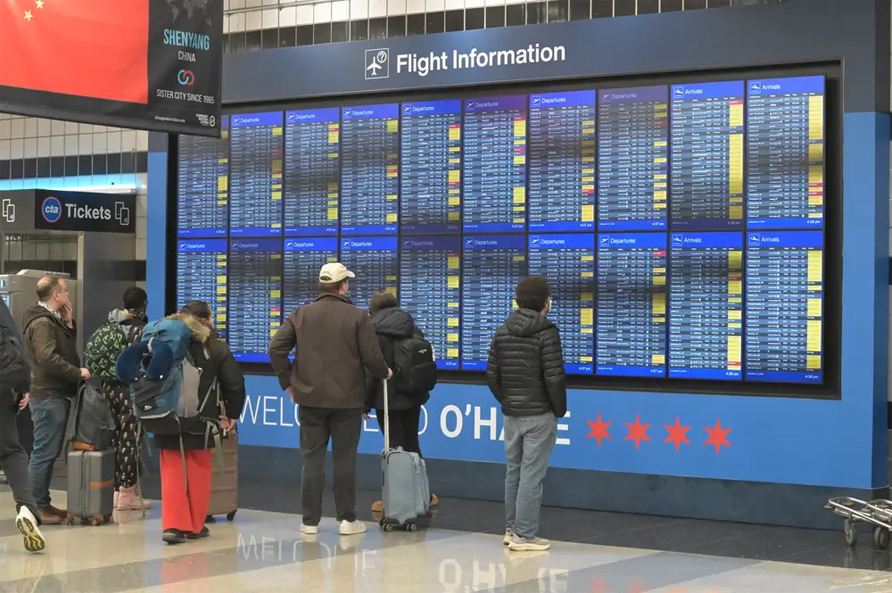
More
than
6,000
flights
were
canceled
and
another
8,000
delayed
Saturday,
according
to
FlightAware
figures
reported
by CNN.
Airports
across
the
country
were
overwhelmed
as
travelers
faced
overnight
stays,
mounting
hotel
expenses
and
missed
business
appointments
and
family
commitments.
But as
airline
operations
struggled
to
recover,
Washington
was
already
fighting
over who
should
answer
for the
failure.
Transportation
Secretary
Sean
Duffy
quickly
pointed
to
congressional
funding
shortfalls
and
L3Harris,
the
contractor
involved
in
upgrade
work
preceding
the
outage.
His
explanations,
however,
raised
another
question:
How
could a
technical
breakdown
involving
critical
aviation
infrastructure
trigger
a
disruption
of this
magnitude?
In the
meantime,
as
millions
of
Americans
head
into
another
workweek,
the
immediate
concern
is
whether
the
nation's
airlines
can
restore
normal
operations
without
another
wave of
cancellations
and
delays.
The
outlook
for
Monday
has
improved
considerably.
By
Sunday
evening,
approximately
88
Monday
flights
had been
canceled,
a sharp
decline
from the
thousands
of
cancellations
recorded
Friday
and
Saturday,
according
to
Reuters.
Duffy
expressed
confidence
that
airlines
would be
operating
at full
capacity
Monday,
following
a
weekend
recovery
effort
involving
carriers,
airport
personnel
and
federal
aviation
officials.
But a
substantially
improved
cancellation
outlook
does not
automatically
mean
every
passenger
will
experience
a normal
travel
day.
The
disruption
scattered
aircraft
and
crews
across
the
country,
forcing
airlines
to
rebuild
schedules,
reposition
planes
and find
available
personnel
to
operate
flights.
Even
after
the
original
technical
problem
is
isolated,
those
logistical
complications
can
continue
affecting
individual
routes
and
connections.
Passengers
with
connecting
flights,
particularly
through
major
airline
hubs,
could
remain
vulnerable
to
schedule
changes,
missed
connections
and
unexpected
delays
as
carriers
work
through
the
remaining
disruptions.
Airlines
will
also be
watching
whether
Monday's
recovery
holds
through
the
week. A
return
to
published
schedules
is one
thing;
maintaining
those
schedules
without
additional
operational
setbacks
is
another.
Travelers
with
flights
scheduled
Monday
and
throughout
the week
should
monitor
airline
notifications,
verify
departure
times
before
leaving
for the
airport
and
allow
additional
time for
possible
disruptions.
The
broader
concern
extends
beyond
Monday.
The
incident
has
raised
questions
about
the
reliability
of the
nation's
aviation
infrastructure
at a
time
when
airlines
must
maintain
demanding
schedules
and
millions
of
Americans
depend
on
predictable
air
travel.
The
immediate
crisis
may pass
as
airlines
return
to
normal
operations.
The
larger
issue
remains:
America's
aviation
infrastructure
must be
reliable
enough
to
withstand
technical
failures
without
bringing
the
nation's
air
travel
system
to a
standstill.
Washington
now owes
the
traveling
public
more
than
another
round of
explanations.
It owes
them
answers.
|
|
|
|
|
|
|
|
|




 I
HI TECH NEWS
I
SPORTS
I