|
|
|
|
|
|
|
|
|
|
|
|
Tech
Giants
Are
Building
Data
Centers
in Rural
Suburbs
As GOP
Leaders
Cheer
Them On
Nilay
Seetharaman
-
Technology
Tell Us
USA News
Network
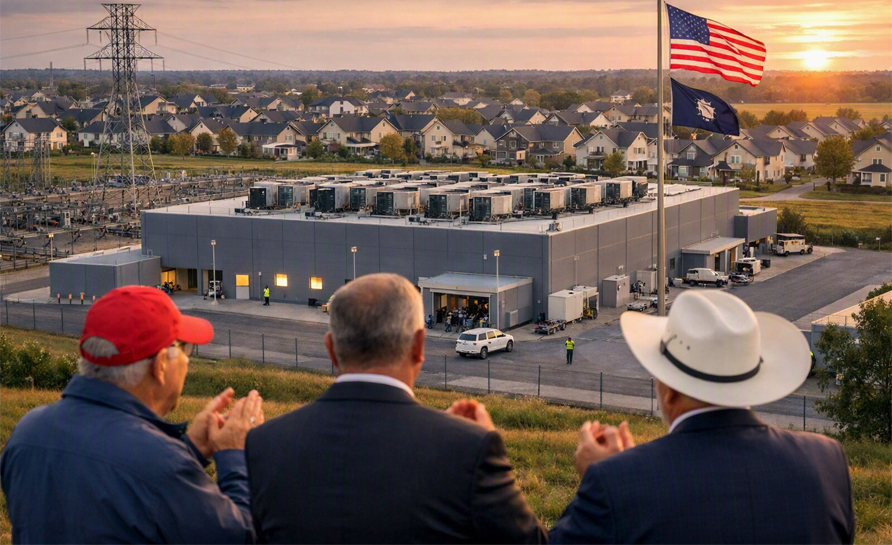
WASHINGTON
— Major
tech
companies
are
building
huge
computing
facilities
— known
as data
centers
— in
small,
rural
towns
that
tend to
vote
Republican.
Industry
needs
are the
main
driver
of where
these
facilities
get
built,
but
Republican
leaders
at the
state
and
national
level
are
actively
encouraging
the
trend.
Why Data
Centers
End Up
in
Rural,
Red
Areas
Four
main
factors
explain
the
pattern:
• Cheap,
available
land.
Modern
AI data
centers
are huge
— some
cover
hundreds
or even
thousands
of
acres.
Open
farmland
is much
cheaper
and
easier
to buy
than
land
near big
cities.
• Power
and
water
access.
Data
centers
need
enormous
amounts
of
electricity
and
water to
run and
cool
their
servers.
Rural
areas
often
sit near
major
power
lines,
gas
pipelines,
and
water
supplies
that can
meet
this
demand.
• Tax
breaks
and
lighter
regulation.
Republican-led
states
typically
offer
tax
exemptions
and
fewer
regulatory
hurdles,
which
makes
building
faster
and
cheaper.
• Fewer
local
roadblocks.
Cities
and
left-leaning
suburbs
often
have
stricter
environmental
rules,
clean-energy
requirements,
and
zoning
laws
that
make
large
industrial
projects
harder
to
approve.
Why
Republican
Leaders
Are
Encouraging
This
Growth
•
Competing
with
China.
National
Republican
leaders
see AI
as a
critical
race
against
foreign
rivals,
especially
China.
They
argue
that
speeding
up data
center
construction
is a
matter
of
national
security.
•
Boosting
the
energy
industry.
Republicans
generally
favor
expanding
natural
gas,
coal,
and
nuclear
power.
Data
centers
run
around
the
clock
and need
constant
power,
making
them
reliable
long-term
customers
for
energy
companies.
•
Claiming
economic
wins.
State
leaders
point to
these
multi-billion-dollar
projects
as proof
their
policies
attract
big
business
and grow
local
economies.
•
Sticking
to
free-market
values.
The
party's
general
opposition
to heavy
regulation
lines up
naturally
with
fast-tracking
permits
and
avoiding
local
building
bans.
How Data
Centers
Affect
the
Broader
Community
• Tax
revenue
— with a
catch.
Data
centers
generate
property
taxes
that can
help
fund
schools
and
public
services.
But many
companies
negotiate
long-term
tax
breaks,
which
shrink
the
actual
payout
to the
community.
• Jobs —
mostly
temporary.
Building
a data
center
creates
a
short-term
boom in
construction
jobs.
But once
it's
running,
a
massive
campus
usually
only
needs a
small
permanent
staff of
technicians
and
security
guards.
• Strain
on local
resources.
The huge
power
demand
can
force
utility
companies
to
upgrade
the
electrical
grid —
and
those
costs
often
get
passed
on to
regular
households
through
higher
bills.
Cooling
systems
can also
use
millions
of
gallons
of water
a day,
straining
local
water
supplies.
•
Permanent
land
changes.
Farmland
or open
space
gets
turned
into
large,
windowless,
guarded
industrial
buildings
— a
permanent
shift in
how the
area
looks
and
functions.
What
It's
Like for
Nearby
Residents
Families
living
next to
a data
center
often
notice
real,
day-to-day
changes:
•
Constant
noise.
Cooling
fans,
chillers,
and
power
equipment
run
24/7,
creating
a steady
low hum.
This
noise
can
travel
through
walls,
leading
to
complaints
about
poor
sleep
and
ongoing
stress.
• Higher
utility
bills.
When
utility
companies
build
new
infrastructure
to
handle
the
facility's
power
needs,
those
costs
are
often
passed
on to
nearby
residents
through
higher
electric
rates.
• Light
and air
pollution.
Bright
security
lighting
can
shine on
nearby
properties
at
night,
and
backup
diesel
generators
release
exhaust
into the
air when
they're
tested.
•
Falling
property
values
and
water
problems.
Homes
near
data
centers
often
lose
value
because
of the
noise
and
appearance
of the
facility.
In areas
where
people
rely on
private
wells,
heavy
water
use by
cooling
systems
can
lower
the
water
table —
sometimes
forcing
residents
to dig
deeper
(and
more
expensive)
wells.
A
Political
Tension
Is
Emerging
This is
creating
friction
within
the
Republican
Party
itself.
While
state
and
national
leaders
keep
pushing
for
faster
development,
local
county
officials
are
facing
growing
pressure
from
their
own
residents
to slow
down,
regulate,
or block
data
center
projects
in their
communities.
|
|
|
|
|
|
|
|
|




 I
HI TECH NEWS
I
SPORTS
I
I
HI TECH NEWS
I
SPORTS
I