|
|
|
|
|
|
 |
|
|
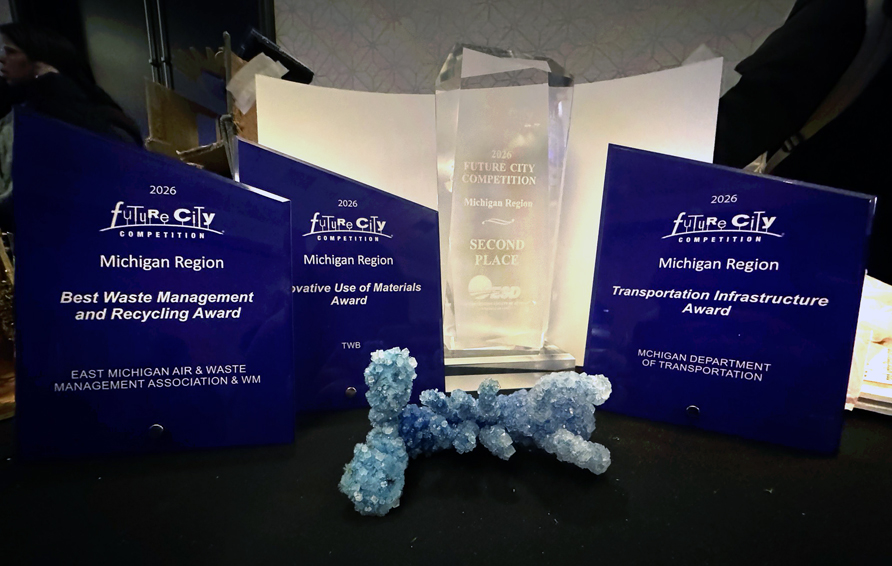
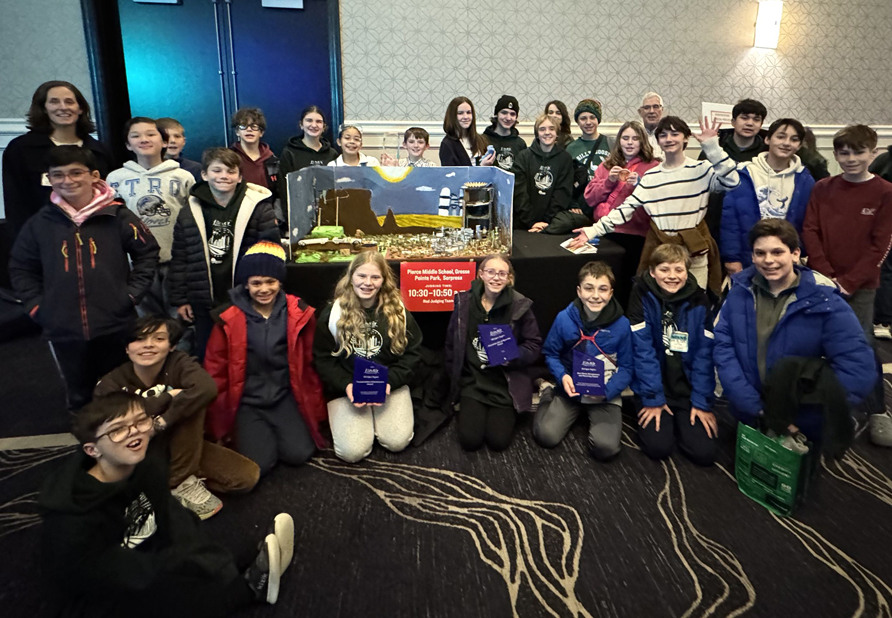
In a
display
of
innovative
engineering
and
visionary
urban
planning,
Team
Sorpresa
from
Pierce
Middle
School
in
Grosse
Pointe
Park
captured
second
place at
the 2026
Michigan
Regional
Future
City
Competition.
Photo
courtesy
of Liza
Sperl |
|
|
Pierce
Middle
School
Secures
Second
Place in
Statewide
Engineering
Challenge
Nilay
Seetharaman
-
Technology
Tell Us
Detroit
News
NOVI, MI
- In a
display
of
innovative
engineering
and
visionary
urban
planning,
Team
Sorpresa
from
Pierce
Middle
School
in
Grosse
Pointe
Park
captured
second
place at
the 2026
Michigan
Regional
Future
City
Competition.
The
event,
held on
January
20 at
the
Suburban
Collection
Showplace,
brought
together
35 teams
from 16
schools
across
the
state.
Students
were
tasked
with the
daunting
challenge
of
designing
a
sustainable
city 100
years
into the
future,
specifically
focusing
on this
year's
theme:
"Farm to
Table."
A
Circular
Vision
for Food
Sustainability
This
year’s
theme
required
students
to
engineer
a
futuristic
city
that
eliminates
food
waste
through
circular
economy
principles.
Team
Sorpresa’s
project
stood
out for
its
comprehensive
approach
to
sustainable
systems—reimagining
how food
is
produced,
distributed,
and
consumed
to
ensure
citizen
health
and
safety.
In
addition
to their
overall
second-place
finish,
Pierce
Middle
School
also
brought
home
prestigious
honors:
The
Herbert
W. Link
Visionary
Award:
Recognizing
the
team's
forward-thinking
approach
to urban
design.
Best
Communication
System
Award:
Awarded
by the
Society
of Women
Engineers
for
their
city’s
advanced
connectivity
infrastructure.
"The
competition
allows
students
to do
what
engineers
do:
solve
some of
today's
most
pressing
issues
with
innovative,
technical
solutions,"
said
organizers
from The
Engineering
Society
of
Detroit
(ESD).
The Road
to the
Finals
While
the
first-place
team
from
Joseph
K.
Lumsden
Bahweting
Anishnabe
Academy
will
advance
to the
National
Finals
in
Washington,
D.C.,
Team
Sorpresa’s
high
ranking
cements
Pierce
Middle
School’s
reputation
as a
powerhouse
in STEM
education.
The
teams
were
judged
by a
panel of
professionals
from the
engineering,
architectural,
and
urban
planning
sectors.
Evaluation
was
based on
several
deliverables,
including
a
virtual
city
design,
a
1,500-word
essay, a
scale
model
built
from
recycled
materials,
and a
live
presentation.
|
|
|
|
|
|
|
|
|




 I
HI TECH NEWS
I
SPORTS
I
I
HI TECH NEWS
I
SPORTS
I