|
|
|
|
|
|
 |
|
|
|
|
|
Ontario
Canada
Wildfire
Smoke
Chokes
The
Great
Lakes,
Northeast;
Health
Alerts
Issued
from
Detroit
to New
York
By Dr.
Edgar
Williams
Tell Us
USA News
Network
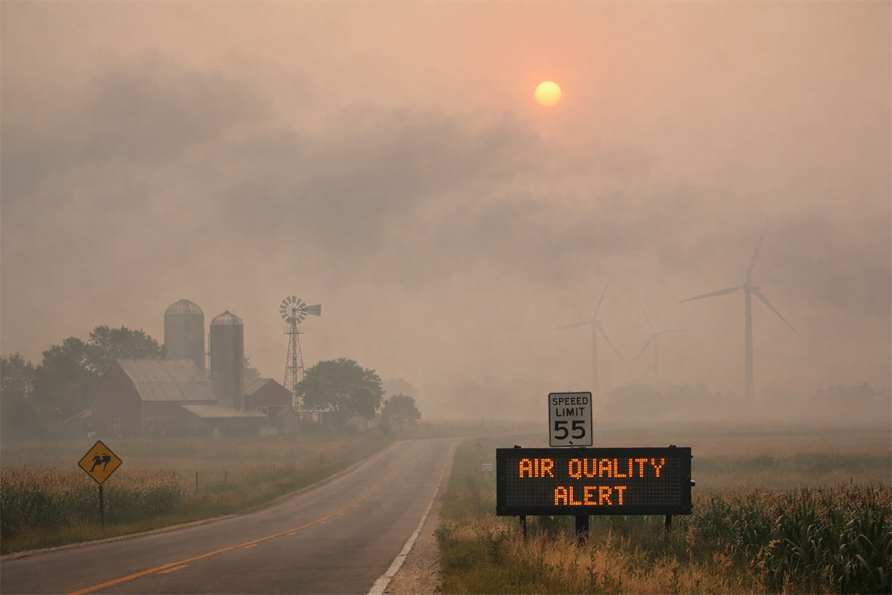
DETROIT
— Metro
Detroit
awoke
Friday
under a
dense
smoky
haze as
shifting
winds
pushed
thick
wildfire
smoke
from
western
Ontario
into
southeast
Michigan,
driving
air
quality
to
unhealthy
levels
and
prompting
new
health
warnings.
Smoke
from
large,
active
fires in
western
Ontario
has
traveled
hundreds
of miles
this
week,
degrading
air
quality
across
the
Great
Lakes
and into
much of
the
Northeast.
Public
health
agencies
are
urging
residents
to limit
time
outdoors,
avoid
strenuous
activity,
and use
high-filtration
masks
when
necessary.
Fires
Fuel
Regional
Impact
Canadian
authorities
report
hundreds
of
active
wildfires
nationwide,
with
major
fire
complexes
in
western
Ontario
and
nearby
provinces
generating
sustained
smoke
plumes.
A
combination
of
persistent
heat and
regional
weather
systems
has
funneled
the
smoke
southward
into the
United
States,
where it
has
become
trapped
near the
surface.
Meteorologists
say
upper-level
winds
are
carrying
the
smoke
across
Lake
Superior
and Lake
Huron
into
Michigan,
then
eastward
through
Ohio and
Pennsylvania
and into
New York
and New
England.
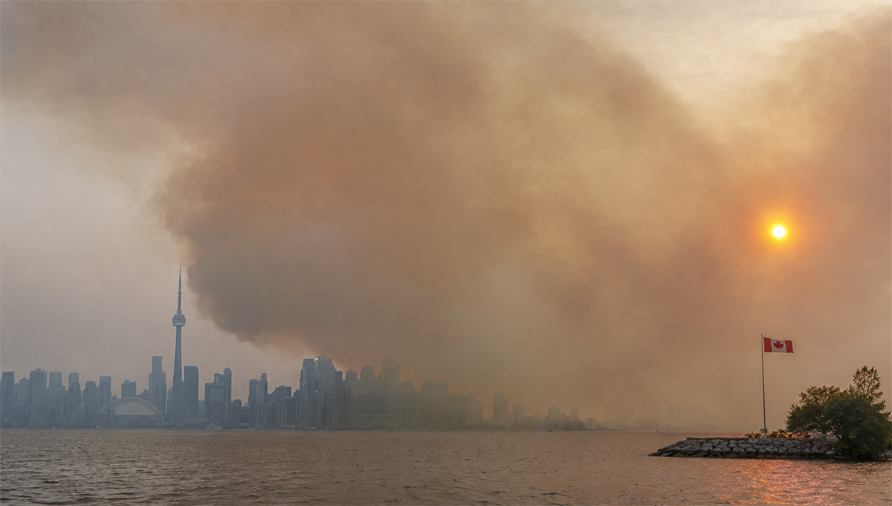
The haze
has
reduced
visibility,
dimmed
sunlight,
and cast
a
gray-orange
tint
over
several
urban
areas.
Detroit,
Great
Lakes
See
Unhealthy
Air
Air
quality
monitors
across
the
region
show
sharp
increases
in fine
particulate
matter,
or
PM2.5, a
key
pollutant
in
wildfire
smoke.
In parts
of
Illinois,
including
Chicago,
pollution
levels
have
surged
to
several
times
normal
summer
levels.
In
Michigan,
Metro
Detroit
has
recorded
fluctuating
readings
in the
“unhealthy”
to “very
unhealthy”
range on
the Air
Quality
Index.
Officials
are
advising
sensitive
groups—including
older
adults,
children,
and
those
with
heart or
lung
conditions—to
stay
indoors,
keep
windows
closed,
and use
air
conditioning
or air
filtration
systems
where
possible.
Northeast
Under
Advisories
As the
smoke
continues
east,
air
quality
alerts
have
been
issued
across
New
York,
Pennsylvania,
and New
Jersey.
New York
officials
have
warned
of
elevated
fine
particulate
levels
in
regions
including
Central
and
Western
New York
and the
eastern
Lake
Ontario
area.
Forecasters
say
smoke
will
persist
across
parts of
the
mid-Atlantic
and
Northeast,
bringing
intermittent
haze and
reduced
visibility.
At
times,
several
U.S.
cities
in these
regions
have
ranked
among
the
worst
globally
for air
quality
during
peak
smoke
conditions.
Health
Risks
and
Precautions
Health
experts
warn
that
even
short-term
exposure
to
wildfire
smoke
can
irritate
the
lungs
and
worsen
conditions
such as
asthma
and
COPD.
Symptoms
may
include
coughing,
chest
pain,
and
shortness
of
breath,
even in
otherwise
healthy
individuals.
Because
PM2.5
particles
can
penetrate
deep
into the
lungs
and
enter
the
bloodstream,
they may
also
increase
cardiovascular
risks,
particularly
for
vulnerable
populations.
Officials
recommend:
-
Limiting
outdoor
exposure.
-
Avoiding
heavy
exertion
outside.
- Using
N95 or
similar
masks if
prolonged
outdoor
activity
is
unavoidable.
-
Keeping
indoor
air
clean by
closing
windows,
using
recirculated
air
conditioning,
and
running
HEPA air
purifiers
if
available.
Outlook
Forecasters
expect
additional
waves of
smoke to
affect
the
Great
Lakes
and
Northeast
through
at least
the
weekend
as fires
continue
to burn
in
Canada.
While
shifting
weather
patterns
may
bring
temporary
relief,
conditions
could
worsen
quickly
as new
smoke
plumes
move
through.
With
many
Canadian
wildfires
still
uncontrolled,
experts
warn
that
periodic
smoke
intrusions
may
continue
to
impact
large
portions
of the
United
States
throughout
the
summer.
|
|
|
|
|
|
|
|
|




 I
HI TECH NEWS
I
SPORTS
I
I
HI TECH NEWS
I
SPORTS
I