|
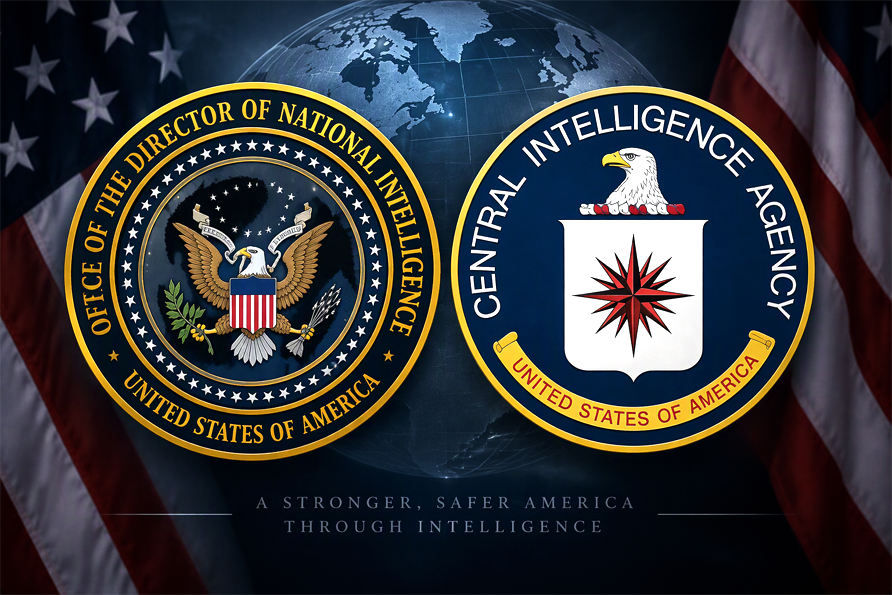
Sensitive
intelligence
systems
compromised
as
Washington
confronts
growing
cybersecurity
threats;
officials
say
classified
information
was not
exposed.
(Image
created
by Tell
Us USA
AI) |
|
|
|
|
|
 |
 |
 |
|
|
|
|
|
|
|
|
|
|
| |
Chinese
Cyber
Threat
Raises
Alarm
After
Hackers
Breach
CIA and
U.S.
Intelligence
Networks
Nilay
Seetharaman
-
Technology
Analyst
Tell Us
USA News
Network
WASHINGTON
- A
cybersecurity
breach
involving
two of
America's
most
sensitive
intelligence
organizations
has
intensified
concerns
about
the
vulnerability
of U.S.
national
security
infrastructure,
with
investigators
examining
a
sophisticated
intrusion
into
computer
networks
operated
by the
Central
Intelligence
Agency
(CIA)
and the
Office
of the
Director
of
National
Intelligence
(ODNI).
The
breach,
first
reported
November
24,
involved
unclassified
but
sensitive
computer
systems
used by
intelligence
analysts
to
collect,
process
and
evaluate
publicly
available
information.
Although
officials
say
classified
networks
were not
compromised,
the
incident
raises
troubling
questions
about
how
deeply
foreign
adversaries
may be
penetrating
the
American
intelligence
community.
China's
growing
cyberespionage
capabilities
are
adding
another
dimension
to the
investigation.
However,
authorities
have not
publicly
established
Chinese
government
responsibility
for this
particular
intrusion.
According
to
reporting
by The
New York
Times,
subsequently
corroborated
by other
news
organizations,
the
compromised
systems
supported
open-source
intelligence,
commonly
known as
OSINT.
These
systems
allow
intelligence
agencies
to
examine
information
gathered
from
websites,
social
media
platforms,
commercial
databases,
satellite
imagery
and
other
publicly
accessible
sources.
The CIA
and ODNI
have not
disclosed
precisely
what
information
was
accessed,
whether
data was
removed
or how
long
unauthorized
access
continued.
An ODNI
official
said the
incident
did not
disrupt
critical
intelligence
capabilities
or
affect
classified
systems.
The CIA
declined
to
comment
publicly.
A
Potential
Intelligence
Gold
Mine
Although
the
compromised
systems
reportedly
contained
no
classified
information,
cybersecurity
specialists
warn
that the
consequences
could
extend
well
beyond
the
exposure
of
ordinary
public
information.
Open-source
intelligence
has
become
an
increasingly
important
component
of
modern
intelligence
operations.
Analysts
use
publicly
available
information
to
identify
foreign
military
movements,
monitor
political
developments,
evaluate
emerging
threats
and
track
the
activities
of
hostile
governments
and
organizations.
An
adversary
gaining
access
to these
systems
could
potentially
learn
what
American
intelligence
analysts
are
investigating,
which
countries
and
organizations
are
receiving
heightened
scrutiny,
and what
information
U.S.
intelligence
agencies
consider
strategically
important.
That
information
could
provide
foreign
intelligence
services
with
valuable
insight
into
American
intelligence
priorities
without
requiring
them to
penetrate
classified
databases.
The
distinction
between
classified
and
unclassified
information,
therefore,
does not
necessarily
translate
into a
distinction
between
harmless
and
consequential.
China's
Expanding
Cyber
Capabilities
The
incident
comes as
American
intelligence
and
cybersecurity
officials
continue
warning
about
China's
expanding
ability
to
exploit
vulnerabilities
in U.S.
government
networks
and
critical
infrastructure.
Chinese
state-sponsored
hacking
organizations
have
previously
been
implicated
in
extensive
cyberespionage
campaigns
targeting
American
government
agencies,
telecommunications
companies,
defense
contractors
and
private-sector
organizations.
The
latest
breach
has also
drawn
attention
to
ARTEX,
an
AI-assisted
penetration-testing
framework
reportedly
associated
with a
Chinese
cybersecurity
developer
and
increasingly
used in
hacking
operations.
Reporting
by
Nextgov/FCW
identified
ARTEX as
a
possible
tool
involved
in
recent
intrusions
affecting
U.S.
government
systems.
However,
the
precise
role of
the
technology
in the
CIA and
ODNI
breach,
as well
as the
identity
and
affiliations
of the
attackers,
remain
unclear.
The use
of an
AI-assisted
hacking
tool
also
underscores
a
growing
concern
among
cybersecurity
experts:
artificial
intelligence
is
accelerating
the
ability
of
malicious
actors
to
identify
vulnerabilities
and
conduct
sophisticated
cyber
operations.
A
Growing
Pattern
of
Government
Cybersecurity
Incidents
The CIA
and ODNI
breach
comes
amid a
troubling
series
of
reported
cybersecurity
incidents
involving
federal
government
systems.
The FBI
is
investigating
a
separate
suspected
intrusion
involving
its
National
Crime
Information
Center,
a
nationwide
database
used by
law
enforcement
agencies
to
access
criminal
histories,
outstanding
warrants
and
other
sensitive
information.
Other
reported
incidents
have
affected
federal
government
computer
systems,
while
the
National
Security
Agency
recently
experienced
a
disruption
involving
its
classified
communications
network.
The NSA
attributed
that
interruption
to
routine
software
maintenance.
Although
investigators
have not
established
that
these
incidents
are
connected,
their
timing
has
intensified
scrutiny
of the
federal
government's
cybersecurity
defenses.
For an
administration
already
confronting
mounting
challenges
involving
national
security,
foreign
intelligence
operations
and
technological
vulnerabilities,
the
incidents
present
an
uncomfortable
question:
Are
America's
intelligence
and law
enforcement
networks
adequately
protected
against
increasingly
sophisticated
cyberattacks?
Questions
Remain
Unanswered
Investigators
still
face
several
critical
questions
surrounding
the CIA
and ODNI
intrusion.
Who
conducted
the
attack?
Was
information
actually
stolen?
Did the
attackers
gain
access
to
intelligence
analysts'
research
activities?
Were
additional
government
agencies
affected?
And did
the
attackers
exploit
artificial
intelligence
to
identify
vulnerabilities
that
conventional
cybersecurity
defenses
failed
to
detect?
Until
investigators
establish
the
origin,
scope
and
consequences
of the
intrusion,
assigning
responsibility
to China
or
another
foreign
government
would be
premature.
But the
larger
national
security
implications
are
unmistakable.
America's
intelligence
advantage
depends
not only
on
protecting
classified
secrets
but also
on
safeguarding
the
information
systems,
analytical
processes
and
technological
infrastructure
that
allow
intelligence
agencies
to
identify
threats
before
they
materialize.
The
latest
breach
demonstrates
that
even
systems
operating
outside
classified
networks
can
become
valuable
targets
in the
increasingly
sophisticated
struggle
for
intelligence
superiority.
|
|
|
|
|
|
|
|
|

 I
HI TECH NEWS
I
SPORTS
I