|
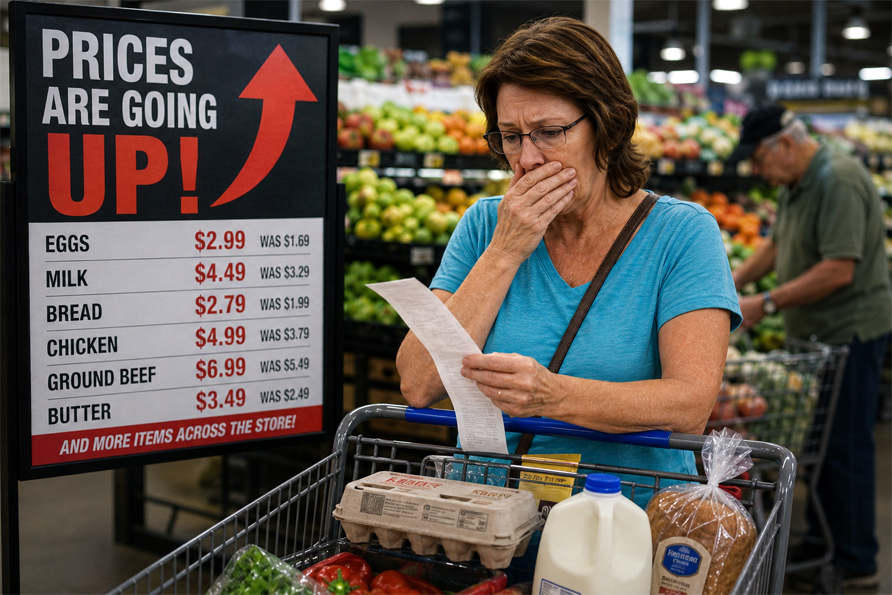
Consumers
are
feeling
the
squeeze
as
rising
prices
turn
everyday
essentials
into
tough
choices.
(AI
generated
image) |
|
|
|
|
|
 |
 |
 |
|
|
|
|
|
|
|
|
|
|
| |
The
Affordability
Trap:
New Poll
Shows
Record
Displeasure
as
Prices
Outpace
Wages
April’s
3.8% CPI
surge
marks a
painful
milestone
as the
Iran
conflict
and
trade
policies
push
prices
past
wage
growth
for the
first
time
since
2023.
Charles
Mosley -
Business/Economy/Money
Tell Us
USA News
Network
WASHINGTON
- The
convergence
of
today’s
Bureau
of Labor
Statistics
(BLS)
report
and the
latest
CNN/SSRS
polling
data
suggests
that the
U.S.
economy
has
entered
a
volatile
new
phase.
While
the
post-pandemic
years
were
defined
by a
"soft
landing"
narrative,
2026 is
increasingly
being
defined
by "the
squeeze"—a
combination
of
geopolitical
shocks,
trade
friction,
and a
historic
collapse
in
consumer
confidence.
I. The
Statistical
Surge
The
April
CPI jump
to 3.8%
represents
more
than
just a
data
point;
it marks
the end
of the
Federal
Reserve’s
cooling
period.
• Energy
as an
Engine:
The
primary
catalyst
is the
conflict
in Iran.
With
global
oil
markets
reeling
from
disruptions
in the
Strait
of
Hormuz,
gasoline
prices
surged
5.4%
this
month
alone.
• The
Tariff
Lag:
Economists
are now
seeing
the
"second
wave" of
inflation
caused
by the
administration’s
trade
policies.
As
domestic
inventories
of
imported
goods
are
exhausted,
retailers
are
passing
the full
cost of
2025’s
tariff
hikes
onto
consumers.
• The
Wage
Gap:
For the
first
time in
three
years,
the rate
of
inflation
has
overtaken
wage
growth.
This
"real
wage"
contraction
is the
fundamental
driver
of the
current
political
crisis.
II. The
Sentiment
Crisis
(The CNN
Poll)
The
latest
CNN
polling
data
reveals
a
"psychological
recession"
that is
moving
faster
than the
actual
economic
data.
Despite
low
unemployment,
the
American
public
is
expressing
a level
of
"purchasing
paralysis"
not seen
since
the 2008
financial
crisis.
• The
88%
Threshold:
An
overwhelming
88% of
Americans
now
believe
it is a
"bad
time" to
make
major
purchases
(homes,
cars, or
appliances).
This
sentiment
is
consistent
across
all
income
brackets,
suggesting
that
inflation
is no
longer
just a
burden
for the
low-income
sector,
but a
deterrent
for the
middle
and
upper
classes
as well.
• The
"Vibe"
Shift:
Only 27%
of
Americans
approve
of the
administration's
handling
of the
economy.
The poll
suggests
that
voters
no
longer
view
inflation
as a
lingering
symptom
of the
pandemic,
but as a
direct
result
of
current
policy
choices
regarding
trade
and
foreign
involvement.
III. The
"Trump
Factor"
and
Policy
Paradox
The
President
finds
himself
in a
"policy
pincer."
The very
tools
used to
bolster
domestic
industry—tariffs
and
tightened
labor
markets—are
now the
primary
contributors
to price
instability.
1.
The Fed
vs. The
White
House:
The
President
has
intensified
public
pressure
on the
Federal
Reserve
to cut
interest
rates.
However,
with
inflation
at 3.8%,
Fed
Chair
Kevin
Warsh is
effectively
locked
into a
"higher-for-longer"
stance,
creating
a public
rift
that is
unnerving
Wall
Street.
2. Short-term
Relief
vs.
Long-term
Risk:
The
proposed
suspension
of the
18.4-cent
federal
gas tax
is
viewed
by many
as a
"Band-Aid"
solution.
While it
may
provide
temporary
relief
at the
pump,
economists
warn it
will
likely
increase
demand,
potentially
driving
crude
prices
even
higher
amid the
Iranian
supply
crunch.
3.
Geopolitical
Stakes:
As crude
oil
rallies
above
$100 per
barrel,
any
further
escalation
in the
Middle
East
could
push
headline
inflation
toward
5% by
the
summer
solstice—a
threshold
that
would
likely
trigger
a formal
recession.
The
Outlook
The
"sour
mood" of
the
American
voter,
as
captured
by
today’s
poll,
suggests
that the
administration's
economic
narrative
is
losing
ground.
As the
2026
midterms
approach,
the
White
House is
no
longer
fighting
a
"transitory"
problem,
but a
structural
one. The
"Trump
Factor"—once
a symbol
of
aggressive
economic
disruption—is
now
being
tested
by the
very
market
forces
it
sought
to
reshape.
|
|
|
|
|
|
|
|
|

 I
HI TECH NEWS
I
SPORTS
I
I
HI TECH NEWS
I
SPORTS
I