|
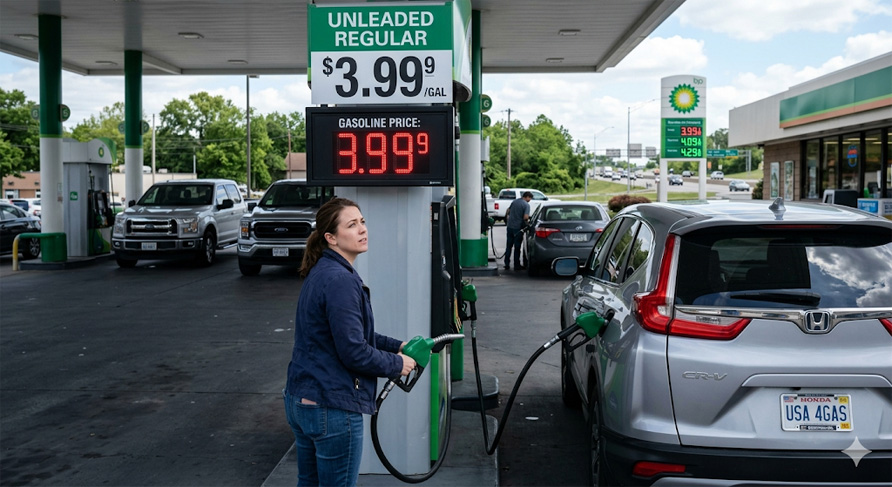
At the
pump,
national
averages
for
gasoline
are
surging
toward
4.00
dollars
per
gallon.
This
isn't
just a
headache
for
commuters;
it’s a
tax on
the
entire
American
supply
chain. |
|
|
|
|
|
 |
 |
 |
|
|
|
|
|
|
 |
|
|
The most
immediate
casualty
of the
hostilities
has been
the
consumer’s
wallet.
With the
Strait
of
Hormuz—the
world's
most
vital
jugular
for
crude—effectively
under a
maritime
blockade,
the
supply-demand
equilibrium
has been
shattered. |
| |
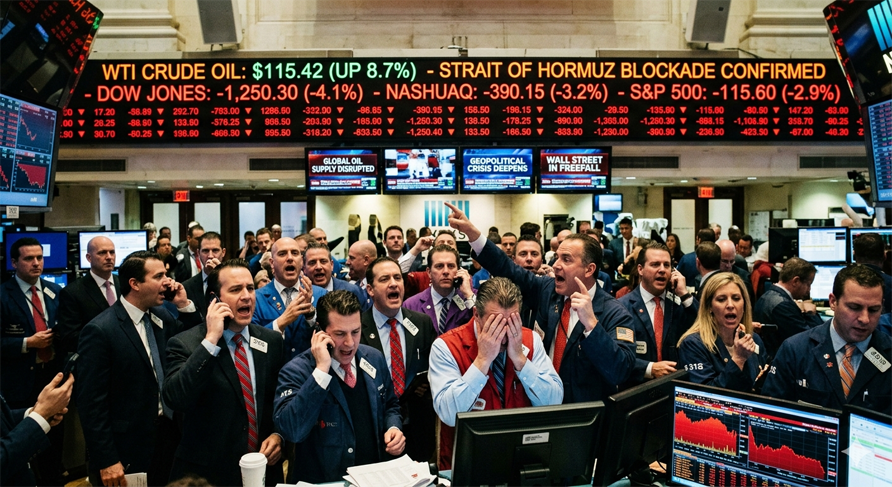
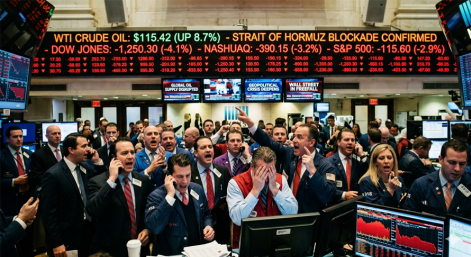
Oil
Shock:
Crude
Hits 115
Dollars
As
Hormuz
Blockade
Triggers
Wall
Street
Bloodbath
Charles
Mosley -
Business/Money
Tell Us
USA News
Network
NEW YORK
- The
peace
dividend
of early
2026 has
evaporated,
replaced
by the
grim,
soot-colored
reality
of a
destabilized
Middle
East. As
the
conflict
with
Iran
escalates
from
rhetorical
sparring
to
kinetic
engagement,
the war
premium
is no
longer a
theoretical
risk—it
is the
primary
engine
driving
every
tick on
the Big
Board.
For
those of
us who
have
paced
these
floors
through
the oil
shocks
of
decades
past,
the
atmosphere
is
hauntingly
familiar.
Here is
the
breakdown
of the
carnage
and the
few
pockets
of
resilience.
The most
immediate
casualty
of the
hostilities
has been
the
consumer’s
wallet.
With the
Strait
of
Hormuz—the
world's
most
vital
jugular
for
crude—effectively
under a
maritime
blockade,
the
supply-demand
equilibrium
has been
shattered.
Brent
Crude
has
punched
through
the 115
dollar
barrier,
with
some
aggressive
desks in
London
whispering
about a
run
toward
140
dollars
if
de-escalation
doesn't
materialize
by the
weekend.
At the
pump,
national
averages
for
gasoline
are
surging
toward
4.00
dollars
per
gallon.
This
isn't
just a
headache
for
commuters;
it’s a
tax on
the
entire
American
supply
chain.
The
major
indices
are
bleeding,
but the
story is
in the
divergence.
We are
seeing a
classic
flight
to
quality,
but with
a
militarized
twist.
Defense
and
aerospace
contractors
like
Lockheed
and
Northrop
are
seeing
heavy
inflows
as
procurement
cycles
accelerate,
with the
sector
up 4.2
percent.
Conversely,
airlines
and
logistics
firms
like
Delta,
United,
and
FedEx
are
being
crushed
under
the
weight
of
surging
jet fuel
costs,
down 6.8
percent.
The
Nasdaq
is off
1.5
percent
as
higher
energy
costs
increase
data
center
overhead
and the
risk-off
sentiment
hits
high-multiple
growth
stocks.
The S&P
500 is
struggling
to find
a floor.
Traders
are
gripped
by the
fear
that
this
energy
tax will
choke
off the
cooling
inflation
the
Federal
Reserve
worked
so hard
to
achieve
in 2025.
The
Federal
Reserve
is now
in a
developmental
nightmare.
Chairman
Powell
was
supposed
to be
navigating
a soft
landing
this
year.
Instead,
he’s
facing a
supply-side
shock
that he
cannot
fix with
interest
rate
tweaks.
If
energy
prices
stay at
these
levels,
the Fed
may be
forced
to keep
rates
higher
for
longer
to
combat
imported
inflation,
even as
the
broader
economy
begins
to
sputter
under
the
weight
of the
war.
Keep
your
eyes on
the VIX.
It’s
currently
hovering
near 28.
If it
breaks
30, we
aren't
just
looking
at a
correction;
we're
looking
at a
fundamental
re-pricing
of
global
risk.
|
|
|
|
|
|
|
|
|

 I
HI TECH NEWS
I
SPORTS
I
I
HI TECH NEWS
I
SPORTS
I